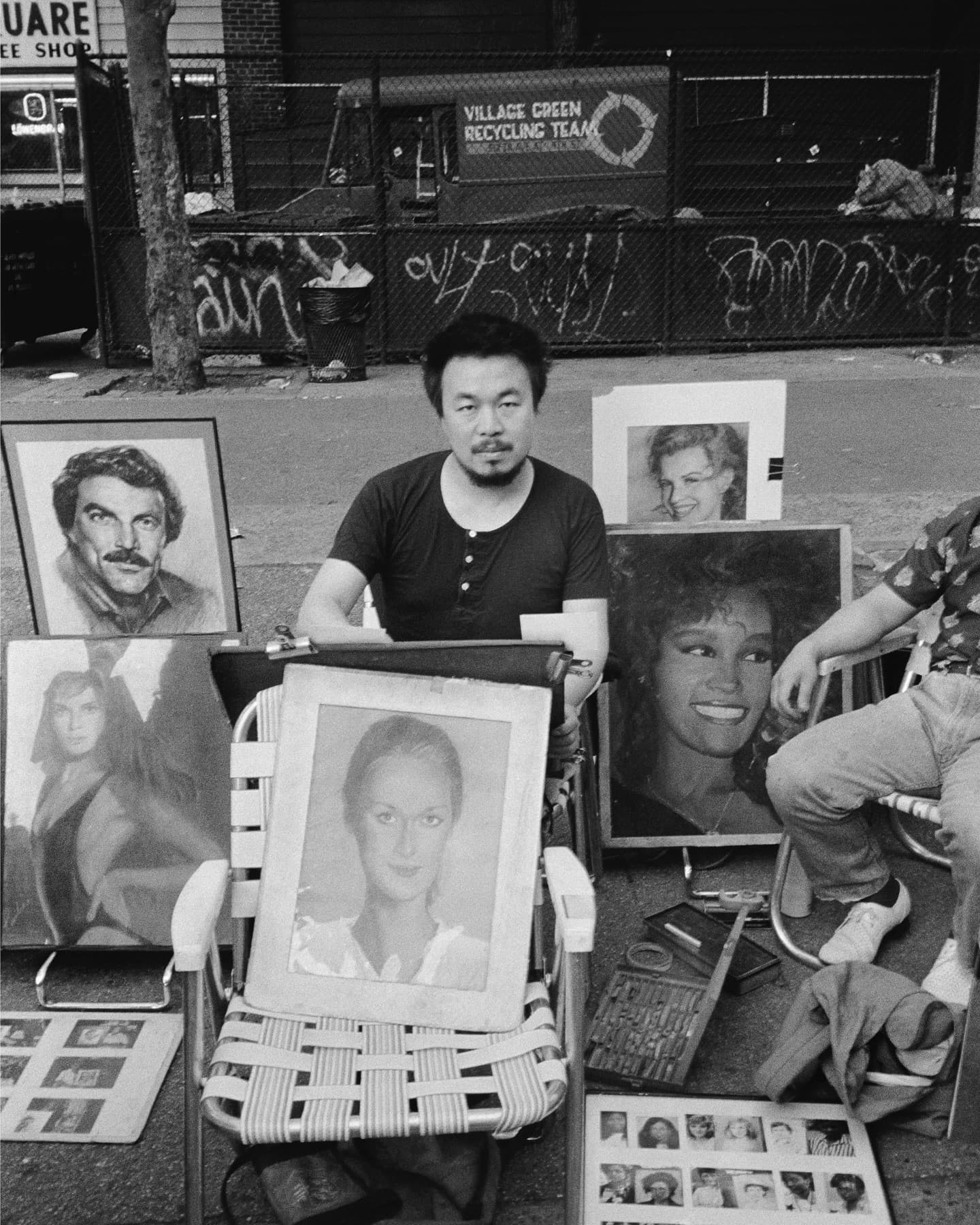
Art’s Gift to Us
How can art transform doubt into a virtue rather than a vice? And what can this teach us about our own political life?
by Teodora Georgescu · 3 min read
There is something paradoxical about standing in front of a work of art and not quite knowing what to make of it. In a time when we are accustomed to being told what things mean, art feels as though it should be as self-revealing as, for example, political speeches: arriving with their conclusions already assembled, or as headlines often delivered with verdicts underscored by the same language of certainty that you may also find in political debate. There is a comfort in knowing where we stand, who is right, who is wrong, what comes next.
Art does not always offer us that comfort. Yet, few contemporary artists have understood the power of this more instinctively than Ai Weiwei. His work inhabits the uneasy territory between beauty and violence, memory and forgetting, the individual and the machinery of the state. It does not merely illustrate political ideas; it places us in front of them. We are asked to look, and then to look again. Because somewhere between the first glance and the second, something begins to shift. You notice what you had overlooked; familiarity is replaced by further interpretations, and an object that seemed beautiful becomes unsettling; something apparently ordinary begins to carry the weight of history. This is one of the quiet powers of art; it can interrupt the stories we have become accustomed to telling ourselves. And perhaps this is why artists have so often found themselves in uneasy relationships with power.
Read the rest with a free account.
Three pieces of every issue are open to everyone. Sign up to read the whole Brief, and the archive.