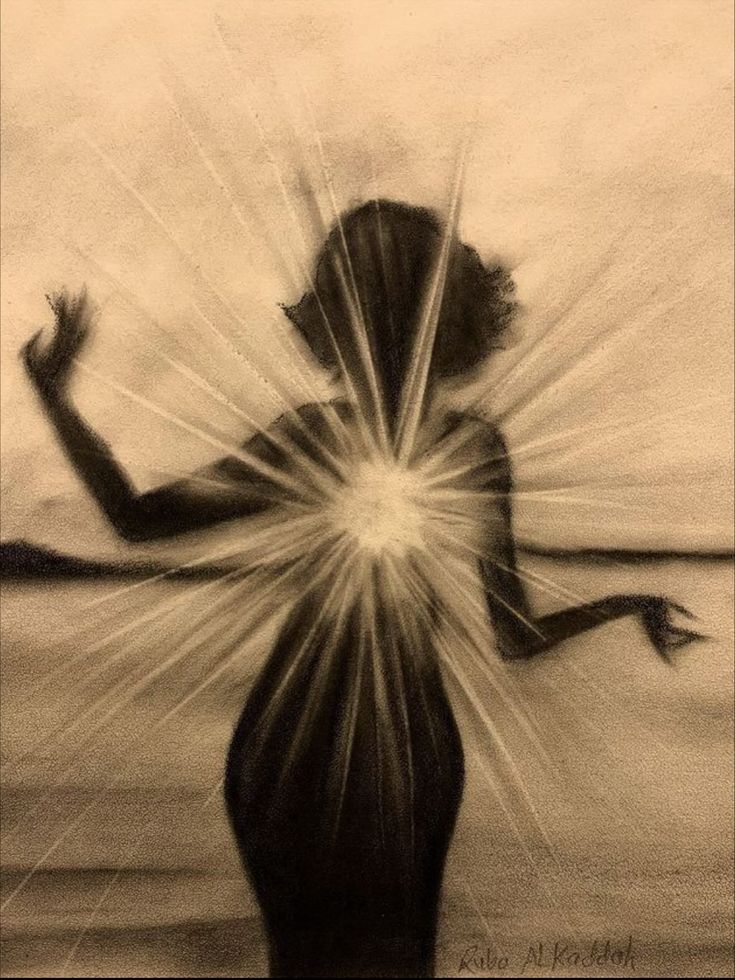
What happens when uncertainty enters the creative process? Instead of viewing it as a feeling we constantly try to escape from, we could allow it to guide us into creating at our highest potential.

You have a song sitting on your laptop that you can’t seem to release. You’ve listened to it a hundred times. You’ve changed the mix, rewritten the lyrics, added a chord, then taken one away. At some point, you were proud of it. Maybe you still are. And yet, every time you think about putting it out into the world, something stops you. Will it respond to an audience? How will people receive this? So you sit on it. But you keep sitting on it, doubting if it’s ever even going to be put out. A lot of artists describe getting to the end of the creation of a piece and feeling disappointed, doubting if this work is worthy, questioning, and that doubt leading to a complete block of releasing the music itself. All of a sudden, it seems even the work you were proud of starts bringing in hesitation. In this way, you allow doubt to become an all-consuming feeling; you give it this immense power to dictate whether or not your work is worthy.
However, not all doubt comes from the same place. There is the doubt that asks, “What will they think?” and then there is the doubt that quietly asks, “Is this actually me?” The first can be paralysing. The second might serve as a vessel to remind you to trust your intuition from the start. Or rather, throughout the entirety of your musical process. Let’s go back to that song you’re sitting on. Maybe there isn’t anything missing with you as an artist; perhaps it’s just in the piece itself. If there are so many questions, so much hesitation that a certain song seems to be unleashing in you, there might just actually be something missing there. Something your subconscious notices, that little voice in your head that doesn’t even have to talk for you to hear it. Yes, doubt can certainly play around with our emotions even when we’re seemingly proud of our work. But more often than not, it creeps in when you yourself don’t believe in the piece; something in your gut is saying, “this isn’t me”.
The hardest, or most demanding aspect of creation is not in the artwork that comes easily. It’s not in the song that, it seems, wrote itself. You craft it up, and it just works. You listen to it again and again, completely enthralled with the fact that it’s your own work. See, that’s the smoothest part. The hard part is the pieces that require more. Perhaps there’s an aspect of the piece that you absolutely adore, but as a whole it just doesn’t agree with you. Or rather, you don’t agree with it.