Brand Logo
Icon

You Only Live ... Twice (?)

You Only Live ... Twice (?)

You Only Live ... Twice (?)

There is a moment where something inside you short-circuits. A friend calls. There is a party, a trip, a concert, a once-in-a-lifetime thing happening right now. You had plans carefully curated in a spreadsheet or a colour-coded calendar accompanied by a reasonable bedtime. And then, in about 5 seconds flat, all of it dissolves. You say yes. You go. You either have the best night of your life, or you end up standing in the middle of nowhere or stumble back home at 3 am, wondering how it all came down to this. Welcome to the philosophical mess we have made of the present tense for ourselves.

by

Mihika Malhotra

2 min read

2 min read

Blog Image

@crutch.tattoos


The phrase You Only Live Once started as a battle cry and became, somewhere along the way, an existential permission slip. Philosophers have long grappled with the problem of mortality and how it should shape the world we live in. Epicurus urged us to pursue simple pleasures. The Stoics told us to memento mori – remember that you will die – not as a cause for panic, but as a reason to live deliberately. Even Nietzsche’s eternal recurrence was, at its core, a question: if you had to live this exact moment again, forever, would you choose it? 


YOLO is a pop-philosophy version of all of this. It is memento mori, personified, sending you multiple reminders throughout the day. However, at its heart, it is asking something vital: if life is finite, shouldn’t we live every single moment? 


However, it is more complicated than that. 


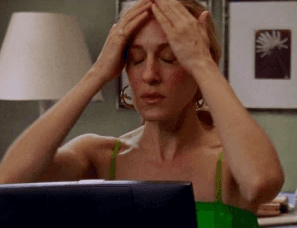
Underneath the thrill of YOLO lives the idea of missing out, which the digital age has popularised as FOMO: #FearOfMissingOut. We are now permanently aware of every experience we are not involved in. Every dinner we were not invited to, or maybe we were too busy to attend. Every picture-perfect sunset, someone else is standing in front of. Every opportunity that is, apparently, only available right now and for a limited time. It becomes a crisis of presence. You are not afraid of actually missing the party. You are afraid that the party is where your real life is taking place, and that you are somehow on the outside of your own existence, looking in. It transforms into a form of self-alienation. 

@canopy_tax


Hence, the birth of impulsivity. When the fear of missing out becomes loud enough, the rational mind gets drowned out. The decision is no longer, should I go? It becomes, I cannot afford not to go. The act stops being a choice and starts becoming a reflex. You are not living once; you are reacting to the possibility that life is happening somewhere that you are not a part of. 


The truth, however, about impulsive decisions is that they bifurcate sharply. There is no middle ground. One version ends with a story you will tell for the rest of your life. You said yes to the last-minute flight and had the best trip of your life, or you went to the party after work and met someone who changed your direction entirely. The impulse, in these cases, feels like a god-given sign, where you internally know something is going to turn out for the best before your fully booked calendar does.


The other version ends a bit differently. You cancelled the self-care you needed and chased the thing that was glittering far away, only to arrive somewhere hollow. You spent the money you did not have. You lost sleep that your body was rationing carefully. The five-second think-tank version of yourself, who could not just say no, ends up regretting the actions in itself. 


Don’t get me wrong, spontaneity is not your enemy. But neither is a schedule. The schedule, in many cases, is what makes spontaneity possible. It is the thing that holds the rest of your life together long enough for you to occasionally, deliberately, abandon it. 


Consider a different kind of man who only lives twice. 


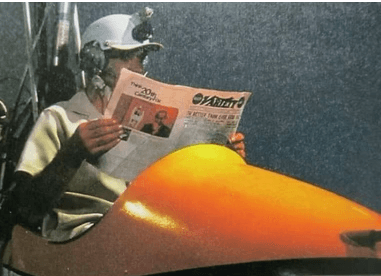
In the 1967 film You Only Live Twice, James Bond does not merely act on impulse, he is impulse, institutionalised. He fakes his own death, is reborn, infiltrates a criminal network, prevents a world war, all while making decisions in real time with zero apparent planning. He is the embodiment of pure spontaneity. Someone for whom every impulsive decision lands perfectly, and the world rearranges itself around his momentum. 


We love Bond partly because he is the absolute inversion of our anxiety. Do you think Bond ever wonders if he should have stayed home? But Bond is not a philosophy, he is a wish. The title of the film itself suggests that there are second chances in life. 


Living twice implies that the first life, in a way, was insufficient, that real life starts somewhere after the one you have already spent doing something else. 


Socrates believed that a life devoid of self-reflection and critical thinking is essentially meaningless. Boiling that thought to its simplest form, he was asking us to take a pause and think. It requires the willingness to not fill every hour, to let some invitations go unanswered, to sit with the mild discomfort of missing something. You do not need to do every single thing, and this in no way should be seen as a defeat or resignation. It is discernment. The Stoics called it prohairesis, where you have the capacity to choose what is truly yours to pursue and to release what is not, without grief. 


@canopy_tax


Consider a different kind of man who only lives twice. 


In the 1967 film You Only Live Twice, James Bond does not merely act on impulse, he is impulse, institutionalised. He fakes his own death, is reborn, infiltrates a criminal network, prevents a world war, all while making decisions in real time with zero apparent planning. He is the embodiment of pure spontaneity. Someone for whom every impulsive decision lands perfectly, and the world rearranges itself around his momentum. 


We love Bond partly because he is the absolute inversion of our anxiety. Do you think Bond ever wonders if he should have stayed home? But Bond is not a philosophy, he is a wish. The title of the film itself suggests that there are second chances in life. 


Living twice implies that the first life, in a way, was insufficient, that real life starts somewhere after the one you have already spent doing something else. 


Socrates believed that a life devoid of self-reflection and critical thinking is essentially meaningless. Boiling that thought to its simplest form, he was asking us to take a pause and think. It requires the willingness to not fill every hour, to let some invitations go unanswered, to sit with the mild discomfort of missing something. You do not need to do every single thing, and this in no way should be seen as a defeat or resignation. It is discernment. The Stoics called it prohairesis, where you have the capacity to choose what is truly yours to pursue and to release what is not, without grief. 


Socrates believed that a life devoid of self-reflection and critical thinking is essentially meaningless. Boiling that thought to its simplest form, he was asking us to take a pause and think. It requires the willingness to not fill every hour, to let some invitations go unanswered, to sit with the mild discomfort of missing something. You do not need to do every single thing, and this in no way should be seen as a defeat or resignation. It is discernment. The Stoics called it prohairesis, where you have the capacity to choose what is truly yours to pursue and to release what is not, without grief. 


Being impulsive is part of being human. Whenever you do get the uncontrollable urge to pursue something or go out of your way…do it. 


But even if you don’t, you will survive. Exactly because you only live once, which is why you are allowed to spend some of it doing 

absolutely 

nothing 

at all. 


@jamesbonddownunder

@donesidies


Socrates believed that a life devoid of self-reflection and critical thinking is essentially meaningless. Boiling that thought to its simplest form, he was asking us to take a pause and think. It requires the willingness to not fill every hour, to let some invitations go unanswered, to sit with the mild discomfort of missing something. You do not need to do every single thing, and this in no way should be seen as a defeat or resignation. It is discernment. The Stoics called it prohairesis, where you have the capacity to choose what is truly yours to pursue and to release what is not, without grief. 


Being impulsive is part of being human. Whenever you do get the uncontrollable urge to pursue something or go out of your way…do it. 


But even if you don’t, you will survive. Exactly because you only live once, which is why you are allowed to spend some of it doing 

absolutely 

nothing 

at all. 


Hence, the birth of impulsivity. When the fear of missing out becomes loud enough, the rational mind gets drowned out. The decision is no longer, should I go? It becomes, I cannot afford not to go. The act stops being a choice and starts becoming a reflex. You are not living once; you are reacting to the possibility that life is happening somewhere that you are not a part of. 


The truth, however, about impulsive decisions is that they bifurcate sharply. There is no middle ground. One version ends with a story you will tell for the rest of your life. You said yes to the last-minute flight and had the best trip of your life, or you went to the party after work and met someone who changed your direction entirely. The impulse, in these cases, feels like a god-given sign, where you internally know something is going to turn out for the best before your fully booked calendar does.


The other version ends a bit differently. You cancelled the self-care you needed and chased the thing that was glittering far away, only to arrive somewhere hollow. You spent the money you did not have. You lost sleep that your body was rationing carefully. The five-second think-tank version of yourself, who could not just say no, ends up regretting the actions in itself. 


Don’t get me wrong, spontaneity is not your enemy. But neither is a schedule. The schedule, in many cases, is what makes spontaneity possible. It is the thing that holds the rest of your life together long enough for you to occasionally, deliberately, abandon it. 


@donesidies

Keep Reading

0%

Keep Reading

0%