
There’s a quiet shift that happens when curiosity gives way to complacency, when songs stop being questions and start becoming background. This is an attempt to return to a way of listening that lingers a little longer and asks a little more.



https://www.visitjamaica.com/listing/kingston-dub-club/3655/
https://www.visitjamaica.com/listing/kingston-dub-club/3655/
I want you to think about your morning routine. Maybe the first thing you do is hop out of bed and head to the coffee machine, maybe you immediately choose your outfit. Do you then go make breakfast or perhaps sit on your balcony and bask in the sun? Whatever it is that you do, I now want you to think about what role music plays in that routine. Is there a certain genre you play while showering that is so intricate to your routine that you can’t even imagine playing anything else? For me, I always start my day with reggae. No matter how much or how little sleep I get, how many deadlines I have waiting for me I know what the second I hear the scratching of Bob Marley’s voice uttering the words “every little thing is gonna be alright” or the rhythms of Al Campbell bursting through every corner of my kitchen, I know I’ll get through the day just fine. It automatically shifts not only your perspective, but the entire internal groove of your body. Yet it also slows me down. Reggae will definitely do that to you. On the mornings I find myself in a rush, that isn’t the ideal situation to be in. What I want to point out with this anecdote is just how much of our lives are intertwined with the music we choose to play. Our body’s rhythms don’t just adapt, they transform.


@grailvision on instagram
@noodsradio on instagram
What, then, happens when the algorithm starts to choose the tunes that blast straight into our ears, and how do we make sure our curious nature stays intact within the process? It is not to say that algorithms bring in a solely negative experience, and I’m certainly not saying you shouldn’t click on that song you’ve been eyeing in the “Discover Weekly” section of your Spotify feed. Algorithmic streaming platforms can bring in recognition for underground artists as well as open up a world of musical experience you have yet to uncover. However, I argue that we need to unlearn the way in which we use these tools. They’re not going away any time soon, but we can’t allow ourselves to lose our wonder in them.
Pharell Williams has said, “Complacency kicks in when your distractions get louder than your curiosity”, and when you then get rid of those distractions, you allow for your inquisitive mind to blossom. This is why, I argue, that sometimes to regain curiosity within the way we listen to music, we have to kill the noise. Take a week, a day, even half a day to shut out all music. Of course, in the world we live in, music is inevitably everywhere. Whether it’s a street musician tucked away in the corner of a park or the top 100 blasting in retail stores, it exists amongst us at all times. That’s why I’m not telling you to hold your hands to your ears like a little kid. No, what I want to emphasise is the listening that goes on between you and your streaming platforms. The entanglement between you and your just as tangled headphones. These technological devices that we hold oh so dearly are simply tangible items serving as a medium between you and your relationship to music, but they are not the relationship.
There’s a difference between hearing and listening that we so often forget. Hearing encompasses the involuntary and effortless practice of interacting with sound. This can be the construction that’s blaring outside your window every morning or the tranquil chirping of birds on your daily walk. Listening, on the other hand, is far more focused and intentional. Think of the queue you set on your phone before your shower or the moment you choose to put on your headphones when you step into the metro. Sometimes in order to be able to participate in the full-body, sensorial experience of listening, one has to remember how to hear again. This is where you start kicking complacency to the curb before it kicks you.
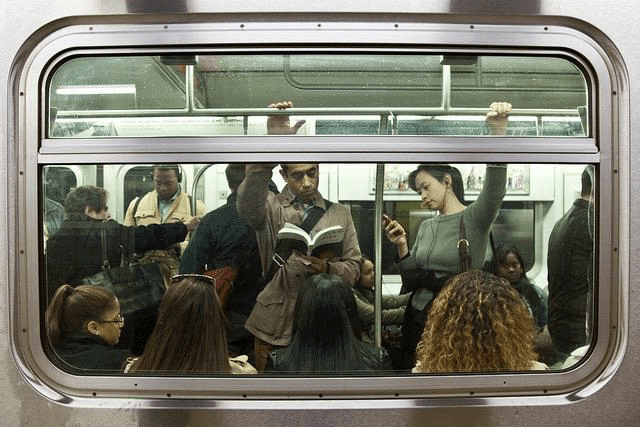
Thanks to the power of noise-cancelling headphones, we are now able to filter out the sounds of the world we inhabit. So shut the music on your little device out for a minute. Hear that top 100 billboard song in Urban Outfitters. Hear the conversations around you on the metro. Hear the drilling of the wall from your next-door neighbour, no matter how much you want to shut it out. Because when you start cancelling out sounds of the world around you, you begin to miss the little things. Sometimes you overhear a conversation on the metro that in some way rings so true to you that it sparks up some internal curiosity and those moments are worth a little discomfort.
There’s a difference between hearing and listening that we so often forget. Hearing encompasses the involuntary and effortless practice of interacting with sound. This can be the construction that’s blaring outside your window every morning or the tranquil chirping of birds on your daily walk. Listening, on the other hand, is far more focused and intentional. Think of the queue you set on your phone before your shower or the moment you choose to put on your headphones when you step into the metro. Sometimes in order to be able to participate in the full-body, sensorial experience of listening, one has to remember how to hear again. This is where you start kicking complacency to the curb before it kicks you.
Thanks to the power of noise-cancelling headphones, we are now able to filter out the sounds of the world we inhabit. So shut the music on your little device out for a minute. Hear that top 100 billboard song in Urban Outfitters. Hear the conversations around you on the metro. Hear the drilling of the wall from your next-door neighbour, no matter how much you want to shut it out. Because when you start cancelling out sounds of the world around you, you begin to miss the little things. Sometimes you overhear a conversation on the metro that in some way rings so true to you that it sparks up some internal curiosity and those moments are worth a little discomfort.
Now when you open your streaming platform of choice back up, try not to press shuffle on the same playlist you’ve been listening to for the past month. Allow the world to guide your way back to listening. Going back to Pharell, he adds that once your mind is open to the world again, you “find yourself creating thought experiments”, and being “enraptured by investigation.” So, try playing the song you shazamed while having coffee one day. Click on the artist’s profile, go to the section around similar artists and start digging. This is how you reclaim the algorithm for yourself.
Hear it all and you’ll be able to listen again.
@noodsradio on instagram
@t.styleldn on instagram
@t.styleldn on instagram
@grailvision on instagram
Now when you open your streaming platform of choice back up, try not to press shuffle on the same playlist you’ve been listening to for the past month. Allow the world to guide your way back to listening. Going back to Pharell, he adds that once your mind is open to the world again, you “find yourself creating thought experiments”, and being “enraptured by investigation.” So, try playing the song you shazamed while having coffee one day. Click on the artist’s profile, go to the section around similar artists and start digging. This is how you reclaim the algorithm for yourself.
Hear it all and you’ll be able to listen again.
What, then, happens when the algorithm starts to choose the tunes that blast straight into our ears, and how do we make sure our curious nature stays intact within the process? It is not to say that algorithms bring in a solely negative experience, and I’m certainly not saying you shouldn’t click on that song you’ve been eyeing in the “Discover Weekly” section of your Spotify feed. Algorithmic streaming platforms can bring in recognition for underground artists as well as open up a world of musical experience you have yet to uncover. However, I argue that we need to unlearn the way in which we use these tools. They’re not going away any time soon, but we can’t allow ourselves to lose our wonder in them.
Pharell Williams has said, “Complacency kicks in when your distractions get louder than your curiosity”, and when you then get rid of those distractions, you allow for your inquisitive mind to blossom. This is why, I argue, that sometimes to regain curiosity within the way we listen to music, we have to kill the noise. Take a week, a day, even half a day to shut out all music. Of course, in the world we live in, music is inevitably everywhere. Whether it’s a street musician tucked away in the corner of a park or the top 100 blasting in retail stores, it exists amongst us at all times. That’s why I’m not telling you to hold your hands to your ears like a little kid. No, what I want to emphasise is the listening that goes on between you and your streaming platforms. The entanglement between you and your just as tangled headphones. These technological devices that we hold oh so dearly are simply tangible items serving as a medium between you and your relationship to music, but they are not the relationship.
Keep Reading
0%
Keep Reading
0%