Brand Logo
Icon

When Songs Refuse to Behave

When Songs Refuse to Behave

When Songs Refuse to Behave

An exploration of music that doesn’t settle, where emotion arrives unevenly, and where the listening experience feels as impulsive as the process behind it, inspired by Dijon’s “Absolutely” (2021).

by

Agota Marija

3 min read

3 min read

Blog Image

@goodluckrodeoclown


This past winter, I saw one of the most moving, intimate, and raw live performances I’ve ever witnessed. I’m sure you know the feeling. It’s the type of gig you go to where you leave with not only the soles of your feet aching but your mind left wondering. How does one reflect themselves on the stage so authentically? How does one present the content of their songs not solely as a discography but as a full sensorial experience, something that leaves a mark on your body and mind? I remember leaving the stage and feeling so empty yet so full at the same time. My emotional bucket filled, drained, and overflowed all in the span of 90 minutes. But mostly, I was simply in awe. 


The artist I’m referring to is Dijon and his 2026 tour concert in Paradiso. As a pretty active listener, most gigs I go to have a way of moving me emotionally, but I hadn’t felt so absolutely enamoured by an artist in a while. He has something special. Dijon has been producing music since he was around 15, marking the beginning of his solo career with the debut singles “Stranger” (2017) and “Skin” (2018). What excites me most about Dijon and his musical identity is his ability not to constrain himself to one confined sound, let alone a musical genre. Listening to his music, you will find hints of R&B, soul, alternative, and indie pop. This limitless approach to musical genres is then reflected in all aspects of his work. It’s that wholehearted giving of oneself to their craft. No borders, no restrictions. 


This is especially prevalent in his debut album “Absolutely” (2021). Hands down, this is one of my most listened to and cherished albums. It exists in a very comfortable nook in my heart. When we think of love songs, traditionally, we often think of ballads with soft, heartfelt lyrics and a gentle melody. We think of songs like “Sparks” (2000) by Coldplay or “Fall in Love With You” (2021) by Montell Fish. Both undeniably great songs, however, sometimes love feels a bit uglier than that. Feelings are just about the only thing about ourselves we cannot control, in that sense, they are perhaps the most authentic aspects of ourselves. No matter how much you want to rationalise how it is a certain person makes you feel, sometimes there is no rationalisation, you just feel on impulse. This is where Dijon’s “Absolutely” (2021) comes in, it’s there for all of those whose inner monologue is often full of anomalies, those who want to feel without any discretion. 


pitchfork


Impulsivity in music can act as a double-edged sword, however, I argue that it leads to work that is intimate, raw, and flooded with emotion. In a time where artificial intelligence is starting to mingle more and more with the dance that is musical expression, intimacy is more of a premium than ever. 


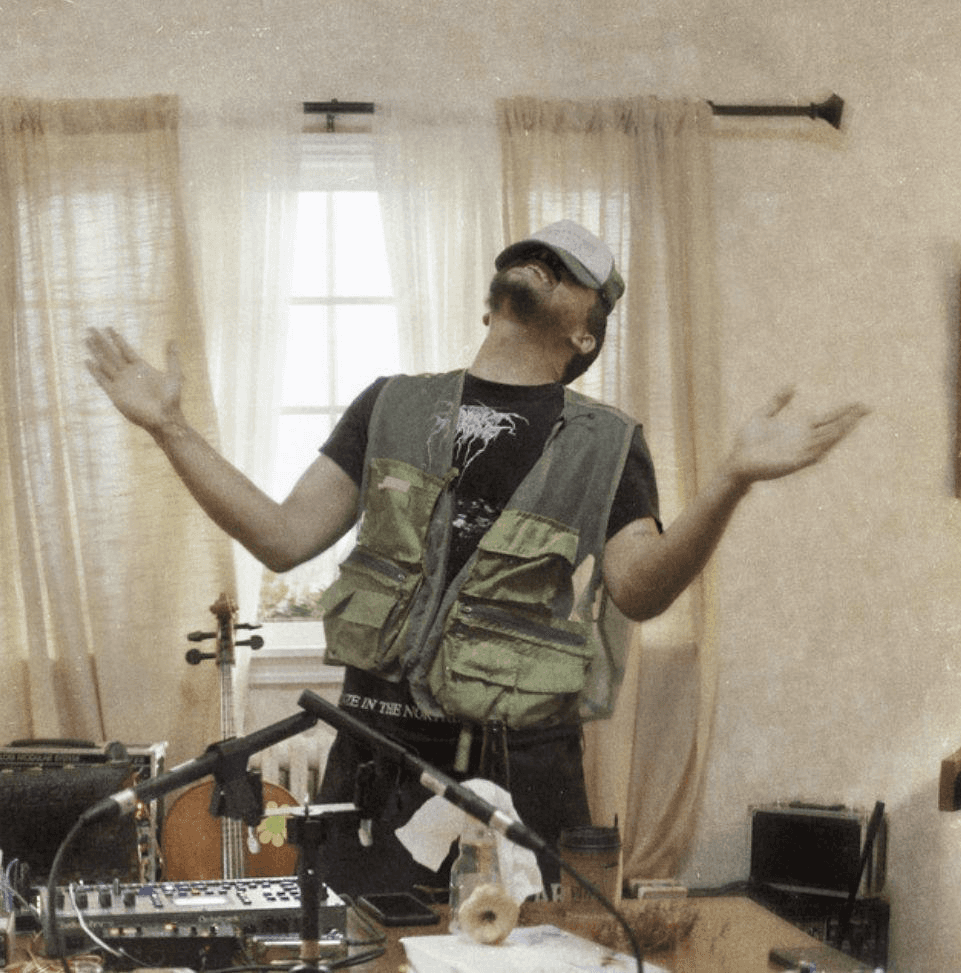
In “Absolutely” (2021), Dijon bares his heart and soul in the exploration of love, heartbreak, and all that lies in between those lines. Not only is an impulsive approach to his music prevalent in the records themselves, but in the entire process that went into making them. Dijon produced this album mostly during the COVID-19 pandemic in his home studio with just a single, central microphone set up in the middle of the room. He described the process of recording the album as an oasis for a “revolving door of collaborators”. He invited people to show up at their leisure, allowing them to hop on and off the record on their own schedule. He describes this collaborative process as “short bursts with friends”. Some key collaborators on the album include Mk.Gee, Jack Karaszewski, Noah Le Gros and Andrew Sarlo, however, he even had a buddy of his, who isn’t a musician, hop on the record “Noah's Highlight Reel” (2021). This “revolving door” mentality is what, then, invites impulsivity to sit in on the recording sessions. 


“Absolutely” (2021) is guided by Dijon’s raspy voice as he travels through love and its complications, marking the album through “gestural explosions”, as described by Dijon himself. A listener is never quite sure what they’re going to hear next. A vocal line might crack or strain instead of resolving cleanly, a melody might dissolve into distortion, a rhythm might arrive too loud or too late. Dijon also rarely gives us the traditional, outright way of storytelling, instead, he often merges phrases that seem like juxtapositions, such as in “Many Times” (2021) with the lyrics “Candlelight, satellite / Television, x-ray vision / What’s it gonna take for you to listen?” Separately, there doesn’t seem to be a correlation between such descriptions, however, that is exactly why it works. Relationships, whether platonic or romantic, can sometimes bring in a sense of feeling unheard, where expression feels misdirected, as if speaking into a blank wall. That frustration doesn’t unfold neatly, it builds, surfacing as something overwhelming and difficult to contain, which is precisely what Dijon’s impulsive sound captures. 


Some of the tracks on this album feel out of place as Dijon jumps from slow jams in “The Dress” (2021) to heavy instrumental percussion in “Many Times” (2021). The record moves quickly, when you feel you’ve settled into a sound, Dijon pulls the carpet from right under you. However, throughout the entire album, the one consistent thing is inconsistency itself. I believe this is where impulsivity can help guide artists into producing work that is raw and intimate rather than precise and polished, because love is not supposed to be polished. 


pitchfork


“Absolutely” (2021) is guided by Dijon’s raspy voice as he travels through love and its complications, marking the album through “gestural explosions”, as described by Dijon himself. A listener is never quite sure what they’re going to hear next. A vocal line might crack or strain instead of resolving cleanly, a melody might dissolve into distortion, a rhythm might arrive too loud or too late. Dijon also rarely gives us the traditional, outright way of storytelling, instead, he often merges phrases that seem like juxtapositions, such as in “Many Times” (2021) with the lyrics “Candlelight, satellite / Television, x-ray vision / What’s it gonna take for you to listen?” Separately, there doesn’t seem to be a correlation between such descriptions, however, that is exactly why it works. Relationships, whether platonic or romantic, can sometimes bring in a sense of feeling unheard, where expression feels misdirected, as if speaking into a blank wall. That frustration doesn’t unfold neatly, it builds, surfacing as something overwhelming and difficult to contain, which is precisely what Dijon’s impulsive sound captures. 


Some of the tracks on this album feel out of place as Dijon jumps from slow jams in “The Dress” (2021) to heavy instrumental percussion in “Many Times” (2021). The record moves quickly, when you feel you’ve settled into a sound, Dijon pulls the carpet from right under you. However, throughout the entire album, the one consistent thing is inconsistency itself. I believe this is where impulsivity can help guide artists into producing work that is raw and intimate rather than precise and polished, because love is not supposed to be polished. 


Dijon has said he makes music out of necessity. Again, in a time when Grimes has launched an AI voice-clone of herself and fear around the use of generative AI grows in the music scene, artists like Dijon remind us that pure, human emotion, evoked through impulsive musical decisions, cannot be replaced. Instead of ‘fixing’ a song, Dijon invites artists to immediately record what they bring to the table and ‘shape’ that after. Dijon’s music feels impulsive because it operates at the speed of feeling, not reflection. In real life, we don’t pause to process before reacting. We speak too quickly, we contradict ourselves, we feel before we understand, and that is what the human experience is all about. 


The more impulsive the music, the more human it begins to feel. 


Click to Play

@dittomusic


Dijon has said he makes music out of necessity. Again, in a time when Grimes has launched an AI voice-clone of herself and fear around the use of generative AI grows in the music scene, artists like Dijon remind us that pure, human emotion, evoked through impulsive musical decisions, cannot be replaced. Instead of ‘fixing’ a song, Dijon invites artists to immediately record what they bring to the table and ‘shape’ that after. Dijon’s music feels impulsive because it operates at the speed of feeling, not reflection. In real life, we don’t pause to process before reacting. We speak too quickly, we contradict ourselves, we feel before we understand, and that is what the human experience is all about. 


The more impulsive the music, the more human it begins to feel. 


Impulsivity in music can act as a double-edged sword, however, I argue that it leads to work that is intimate, raw, and flooded with emotion. In a time where artificial intelligence is starting to mingle more and more with the dance that is musical expression, intimacy is more of a premium than ever. 


In “Absolutely” (2021), Dijon bares his heart and soul in the exploration of love, heartbreak, and all that lies in between those lines. Not only is an impulsive approach to his music prevalent in the records themselves, but in the entire process that went into making them. Dijon produced this album mostly during the COVID-19 pandemic in his home studio with just a single, central microphone set up in the middle of the room. He described the process of recording the album as an oasis for a “revolving door of collaborators”. He invited people to show up at their leisure, allowing them to hop on and off the record on their own schedule. He describes this collaborative process as “short bursts with friends”. Some key collaborators on the album include Mk.Gee, Jack Karaszewski, Noah Le Gros and Andrew Sarlo, however, he even had a buddy of his, who isn’t a musician, hop on the record “Noah's Highlight Reel” (2021). This “revolving door” mentality is what, then, invites impulsivity to sit in on the recording sessions. 


@dittomusic

Keep Reading

0%

Keep Reading

0%