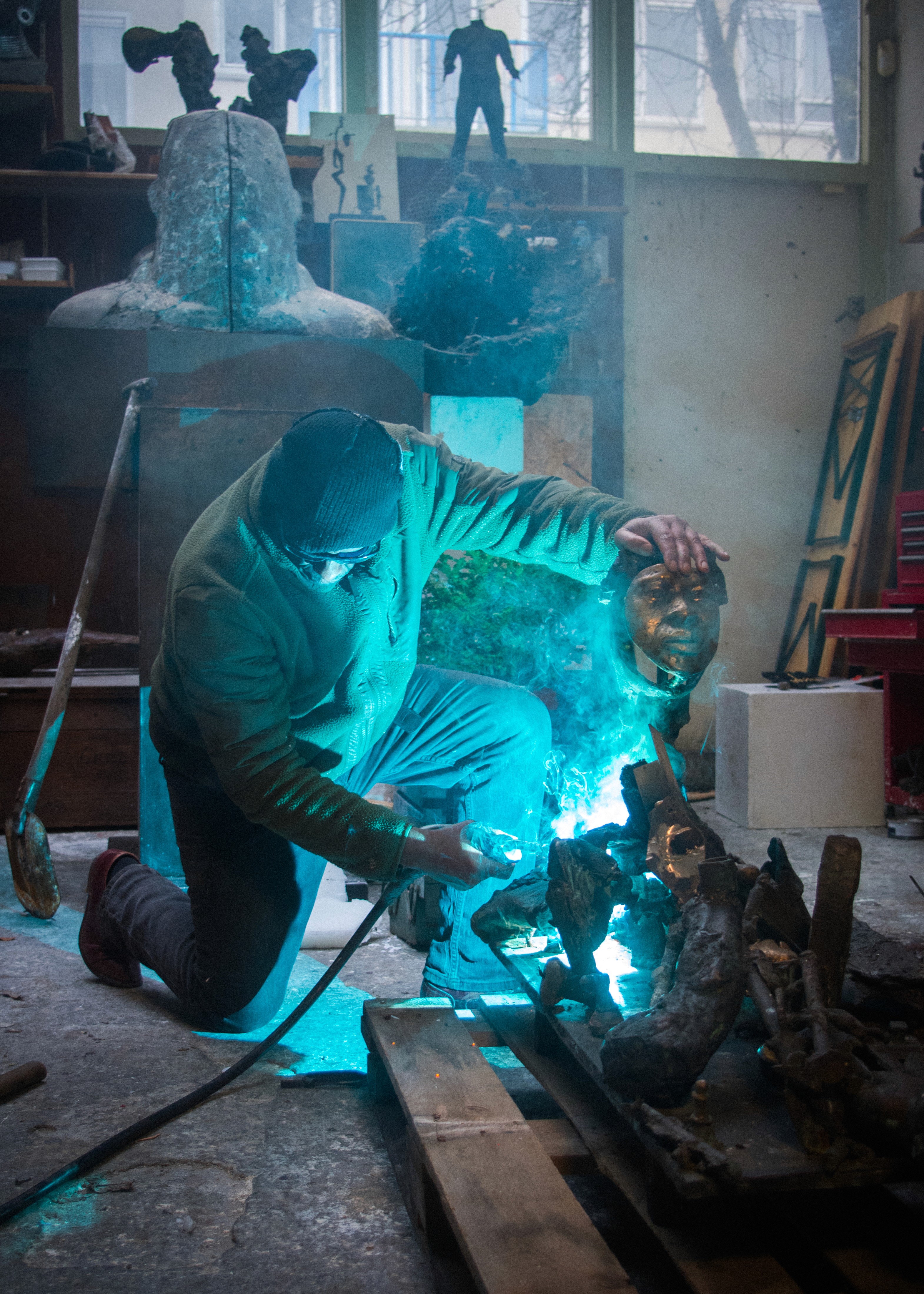
Nelson Carrilho

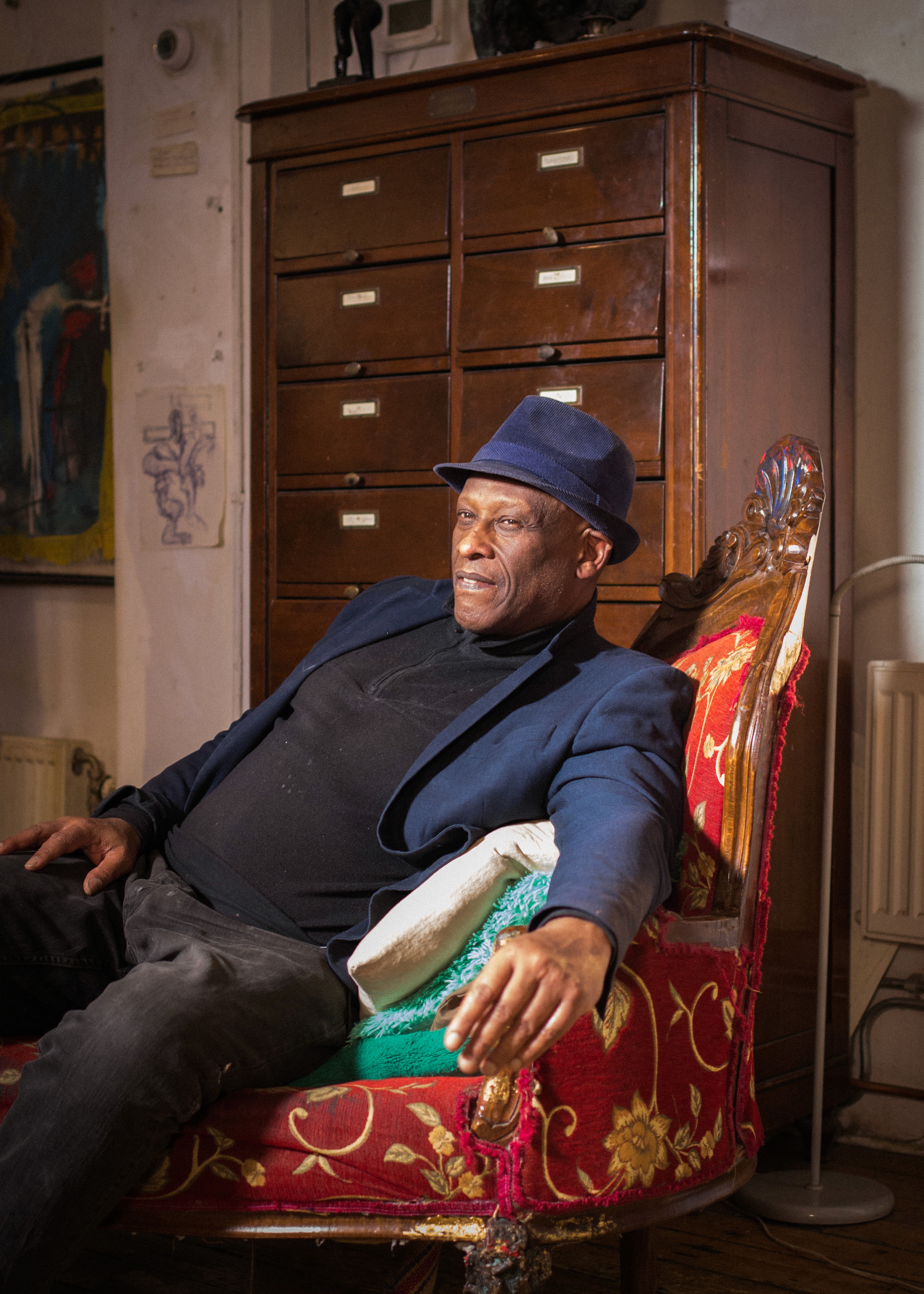
Nelson, who welcomed us into his cultivated space, describes the way to channel African Humanism and the Black Body. To him, chains are what humanity cannot carry, and only those with humanity use their voice as power. He does it with his work.
by

Onelia Helene

5 min read

5 min read

Blog Image
Blog Image
Blog Image

All right, hi Nelson. Thank you for joining us today. So, just to start off, can you tell me a little bit more about yourself? 


So, I came from Curaçao, right? I was born there in 1953. As a family, we came to Holland in the 1960s. In 1964, because of the economic situation in Curaçao, we had to leave as a family and migrate, actually. My family was looking out the better goods for the children, better education for the children. So, we came here in 1964. And I did do the necessary schools here. And then in 1975, I went to an art academy. So, I studied sculpture in 1975. and in 1980, I started as a professional sculptor. And in 1982, I had a studio from 82 and now. I was a professional, let's say, sculptor. But sculpting was more a voice of deep ancestral knowledge. That's it, see it this way. It's not about making forms or selling. It was a voice that has to be heard in the outdoors. I soon realized, as a child, that the outdoors is not neutral. The outdoors is for certain people, it's not for the black people.


And when you were younger, what was the moment that kind of made you realize that there is an outside part?


I think the first day when we arrived here. My father had an opportunity to get a very nice apartment. He bought it in a very nice neighborhood. So as soon as we arrived here, we realized that they didn't want us there. So, I already knew. So, I was outdoors, neutral, and I learned to navigate in this— you know— in this identity. Not really identity. Who am I? You know, know yourself. In a period in the 60s that was very creative. So, we had the Beatles, the Rolling Stones, the music, all those things. So it was, for a young black guy, it was very creative. I don't only look at the bad part; it was a very creative part. Changing the narrative of young people, you know, Longyear, the music, the dance. The rebellion. Yeah, it's very creative. I'm very glad to have experienced this time because I was very glad that you came from Curacao here. It was like a new horizon. So, it's not all bad, there was also joy. Looking for your part in this story.

Moving to and growing up here in the Netherlands, especially during this time period, you once mentioned that you were one of the only black ones of the few black families in your neighborhood and one of the few black artists in your school, in your art school. Did you ever feel a sense of responsibility? Responsibility towards representation, towards your community, your ideas, your history, or did you sort of resist the notion of responsibility?


This is a very deep discussion that we also had in the 80s about how black artists have a responsibility to their community. A lot of black artists choose not to go in the figurative form because the figurative form is connected to slavery. So, if I make a form of a Negro, people come in and say that's a slave. So, they tend to go abstract to have their voice. I was more like, my community brought me here. I was reading about the great leaders in the 70s. 80s, so they gave their blood for us because to the 80s they killed them all so the 80s there was change right but till to the 80s they killed them all because what they did they wanted to change the slave narrative so like Huey Newton of the Black Panther Party said, as soon as we want to change the slave narratives, white people get rage. So actually, what he said is, white people can only exist if we stay in the slave narrative. And they don't want us to change the status quo.
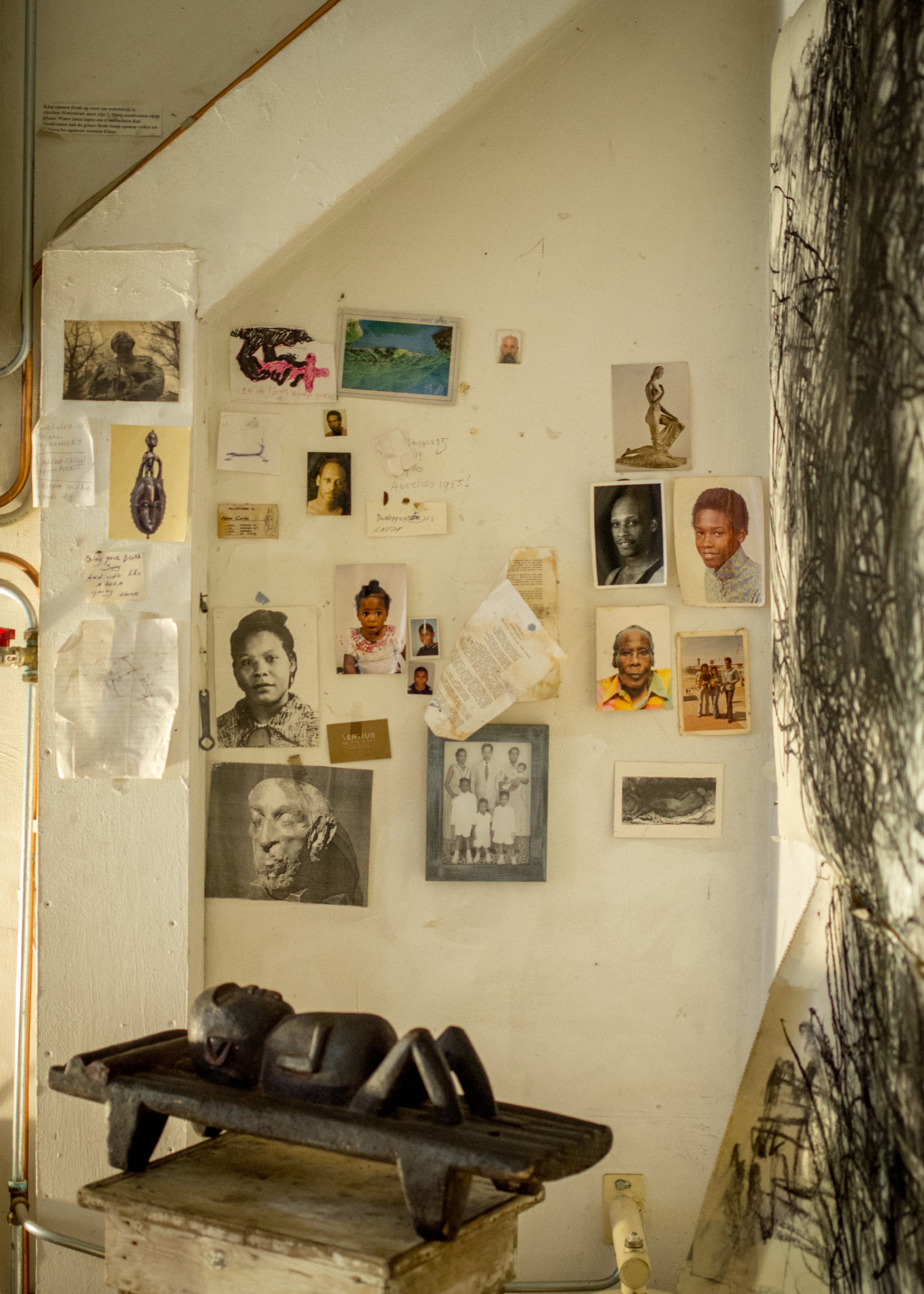
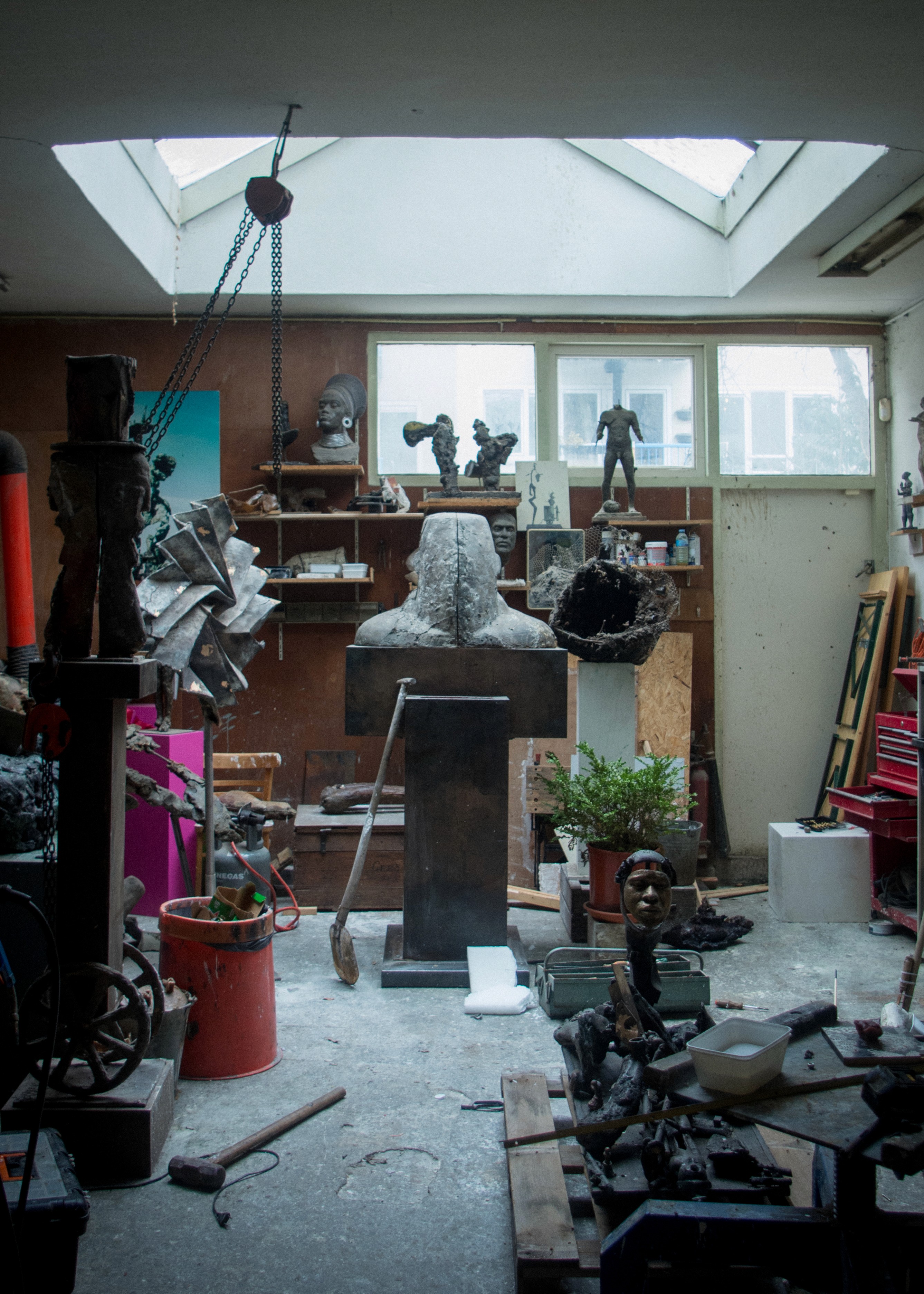
You were commissioned to make a portrait in response to a racist violent attack that happened which you refused. Instead, you ended up making Mama Baranka? And what did that shift and this representation allow you to express? This sort of idea that you weren't going to almost fall back into this narrative that you have to be able to be one of the voices of when something violent happens, you're the one to be up there?


It was difficult, very difficult, because there were two responses after one week. They painted the sculpture [Mama Baranka] white. The sculpture didn't feel the paint, but I felt it. Actually, it's the same in Italy. If they start shouting, we don't want to stop you. The sculpture doesn't feel it. I feel it. It's a way to silence my voice. So, it was very painful because it's me there in the park. It's me in all this nakedness. It's me. And I think 90% of people understood what I did, but there were 10% also of the black community who didn't. I want others to understand my vision. They really wanted me to make it. The pain. But then I asked them, “what is my role as an artist?" It's my role to fill in what you want. Or is my role to have a vision because I have knowledge? Because the moment you place a monument outdoors, it's about time. It's going to be here. Right now, it's more than 40 years [since Mama Baranka was first installed.


Have you ever found it difficult to complete a sculpture because of the emotional weight that comes with it, especially when you're engaging in the history behind it, the history of colonialism, disempowerment, or even violence against Black bodies?


It's not difficult because it's part of my body. It's being me. So, it's not difficult. You know, when the Italian activists came in here and asked me to do something against the murder of Soumaila Sacko, I said, "Yes, let's do it." What are we going to do? I'm going to make big monuments. It's not possible. Let's do the first step. Because I already went through it with the Mama Baranka monument. I knew it was possible. Because, there are no chains. Humanity cannot carry, you cannot put chains on the Mama Baranka. It's too big. Because it's the gospel. It's the beginning of it all. You cannot put change around it.

So, if you start there, you connect with everybody there. Because also in Italy, they go to the Black Madonna. Europe knows the source of humanity. But they had to disconnect the black woman from the knowledge of young people. To have them have a slave identity. So, they know it. I know it in my body. I know it in the rhythm. I also know it in the dance. I know it in poetry, I know it all.

You have two sculptures located in Calabria. The Archer being one of them was often compared to the community and the struggles that those face when coming into Europe, especially in a small town. Were you ever worried that the people will not be able to resonate with a piece like this?


No, there's a story behind it. The story behind this is this: Camini is very successful in inviting migrants to come there and they get paid. In the film you saw children playing, Black children. If you go to other villages in Italy, you won't see any children in general. You only see widows and old people living here. So, because they had this idea of having migrants coming there with all the affairs and they could stay in the village, being part of the village, and then they could decide where they would go in Europe. And this is the best way why we connect with the village, by giving them the sculpture. So that they could be part of our project.


I do have one last question to end it all off. But in one of your interviews, you mentioned that you see life as a big joke. Yeah. Can I ask why?


It's a big joke because we don't acknowledge where we come from. The joke is that somebody pop up, oh, I'm better than you. Why? Because your skin. And the biggest joke is, that the greatest industry in the world is the skin bleaching.

Keep Reading

0%

Keep Reading

0%