

A Guide On How To Discipline The Soul
Politics°08 The Illusion of Control
by Teodora Georgescu · · 3 min read
When I was a child, I was obsessed with knowing as much as possible. I was an obsessive student, an obsessive person, with few boundaries, and I went through life expecting to, simply, be awarded knowledge and information. At school, I was arrogant enough to assume I was usually correct. At home I, with ease, bargained information out of my parents about family members; with news of deaths, marriages, children and other malignant gossip reaching me, and my rather young ears, regularly, I would pester them incessantly about their current friends and their own devastating marriages, asking questions about people I had never even met. Information was a way for me to control my environment. Yet, I was not particularly good at storing or doing anything with it, however I sort of grew up holding close to me the assumption that informaiton was control, and that almost anything could be ‘worked up to the literature’. Meaning that everything had an explanation, a reason and a purpose for being the way that it is. This reconceptualisation of control, as the space between the language used to describe everyday circumstances and the language employed to acquire information, has its origins in a historical context that extends beyond my own early curiosities.
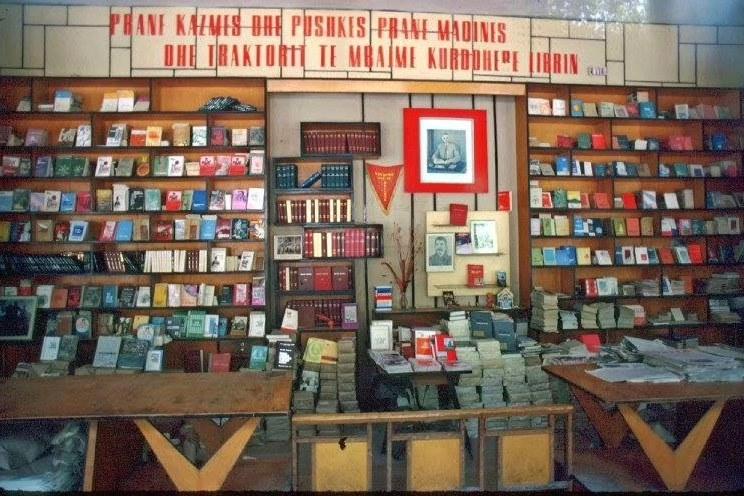
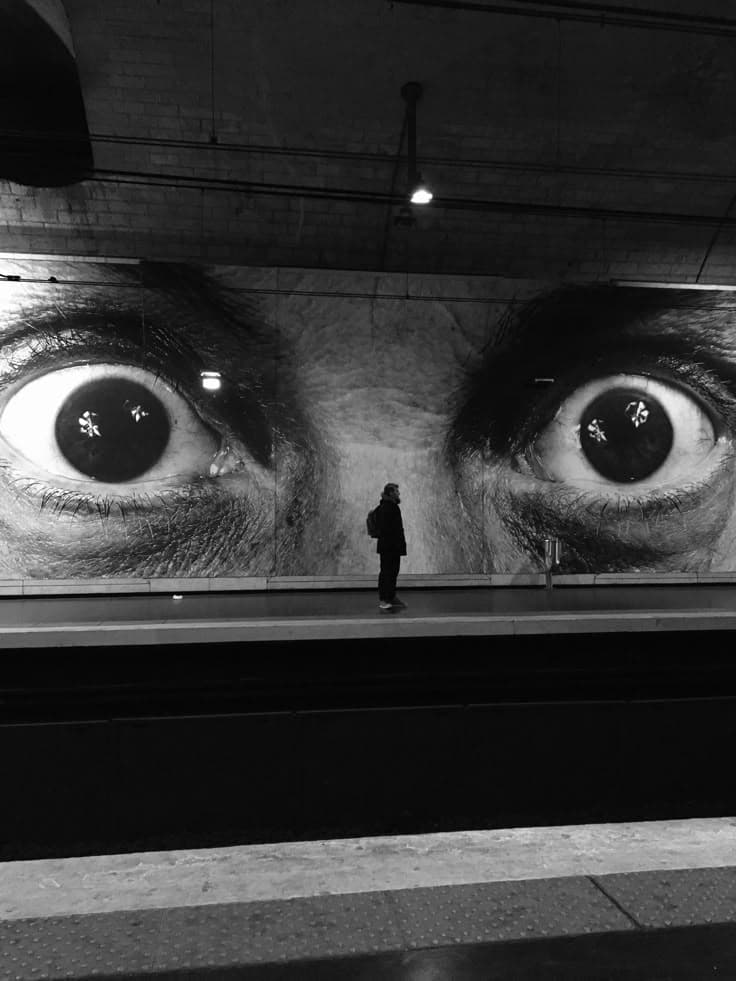
My parents, both, grew up in communist Romania, and their own relationship to information was not a static one. It was precious and certainly not innocent. Knowing things about people, from the marginal to the extreme, and having people know things about you, could feel like a power play. Your every day social life became a chess set, where people represented different things, different outcomes and allowed you to either play with or escape deep political surveillance and censorship. Foucault argued a very tightknit summary of this; he said that, sometimes, control does not always need to be imposed by the state, in other words big brother will not always be there, leaning and peering over your shoulder but what is important is that you always feel as though he is. You must always be aware of your neighbours, your friends, your co-workers, and importantly; yourself. Therefore, you begin to live in a panopticon, you change your own behaviour based on the assumption that you are maybe, probably, being watched. And just like that, you are left with an individual that does exactly what the state wants; they monitor themselves. Without question or exception, they may second guess, think twice or even turn their back on people in order to protect themselves, and, unknowingly, create this peculiar cycle in which surveillance itself is actually not necessary. Therefore, a simple question to this might be; if a regime, defined by dictatorship and pervasive surveillance, collapses, and is essentially wiped out from the political stage of the nation, what can be said of the people? What happens when this caution, this secrecy and distrust are absorbed in to family life and then passed on further down in to generations that never lived under those political systems to begin with?

But, firstly, why would a political system really want to enter people’s private lives to begin with? This isn’t really a question that can be answered only by the usual reliance on loyalty to the leader, or just obedience to laws alone, but there is actually something far more sinister to be found in the state reaching inside of your home. If the state simply wanted you to obey it’s laws then, well you would have the kind of state that we are all living in now, where although there is control, it tends to lean further away from controlling your personal life. However, if we adopt something that Hannah Arendt follows in her Origins of Totalitarianism then we can see that totalitarian systems are often trying to transform society as a whole. They are more concerned with the complete destruction of spontaneity as a whole; the ability to think and act completely independently. Thus, if a state wants to transform society, then everything else matters; your education, your friends, what you believe, what you say, what you think etc.
Yet, this state transformation seems to have outlived the state completely. Thus, there is this conceptual problem that arises once you begin to think about political control as something that ends once the regime falls. A regime can disappear much faster than the habits it inflicted upon people. This understanding that people, old or young, living under authoritarianism develop a sort of instinctual awareness, regarding what information is, what it can do and where it can take you is where the question can become generational. My parents grew up under communism, I did not. I have never had to calculate whether an opinion or a piece of information could put me at risk or not, and if anything, my own curiosity about information led me to becoming more greedy, not more aware. Yet, for my parents, information did have consequences.
I did not inherit the political circumstances that shaped my parents’ relationship with information, but I may have inherited something of the relationship itself. The caution with which they approached certain subjects and the instinct to distinguish between what could be shared and what was better kept private are not necessarily lessons that needed to be explicitly taught. They could exist in the ordinary rhythms of family life, in the pauses that followed certain questions, or in the subtle ways that particular subjects were approached.
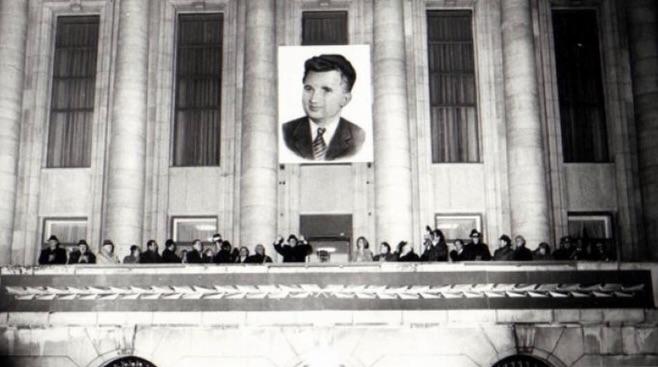
In this sense, the transmission of political control does not necessarily depend on the continued existence of the political system that first imposed it. Instead, it can survive through the anxieties that people carry with them long after that system has disappeared. What was once a strategy for survival can become a form of inherited consciousness, shaping the way subsequent generations understand information, privacy, and the boundaries of what can be said. The irony, perhaps, is that I inherited a curiosity about information from people who had learned to be cautious of it.
And so, the question becomes not simply whether political control survives the collapse of the state, but whether it can continue to shape the lives of people who have never directly experienced it. Perhaps the most enduring form of control is not the one that demands obedience in the present, but the one that becomes embedded in the habits and instincts of future generations, long after the authority that created it has ceased to exist. This is not the same thing as literally inheriting communism. But it is important to understand just how a political system, such as communism, created a very specific culture and tradition amongst the people. One that was, and continues to be, defined by the different faces of political oppression. And this idea of inheritance is one that is much less obvious, manifesting itself through the very particular relationship with authority and the instinct to separate what belongs in public to what belongs at home. Research on post-communist Romania has found evidence that political attitudes and behaviours can be transmitted between parents and children, even after the political environment has changed. Letiția Pop, for example, argues that parents who were socialised under Romanian communism could influence the political attitudes and behaviours of their children despite subsequent post-communist resocialisation. Research by Alin Gavreliuc similarly found continuities in values and attitudes across Romanian generations after 1989, suggesting that a historical rupture does not necessarily produce an immediate psychological or cultural rupture. In other words, the imprint of the state will always persist within it’s people, even after the death of it’s authority.
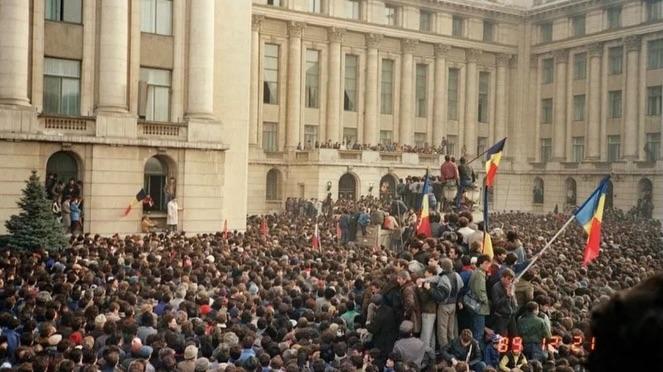
And perhaps, what was inherited was not a literal obsession with information, or a nosey fanaticism about the lives of others. But it was a very particular understanding of what information could do and what it can allow you to control.




Comments
No comments yet.
Log in to join the conversation.