A Fresh Coat Of Gold

A prayer wheel. A painter. A pause. Ordinary things that we take for granted, dismissed as background rather than meaning. And yet, can these seemingly unremarkable moments reshape our misconception of rebirth as something dramatic or spectacular? Perhaps rebirth does not arrive in grand declarations or visible transformations, but in repetition, patience and subtle shifts of awareness. If rebirth and consequently rebranding lives here—in routine, attention and ordinary—then what might we discover if we began to look more closely at the moments we usually overlook?
by

Mihika Malhotra

3 min read

3 min read

Blog Image
Blog Image
Blog Image

The monastery wasn’t being rebuilt. No rituals were underway. No chants marked the moment. At

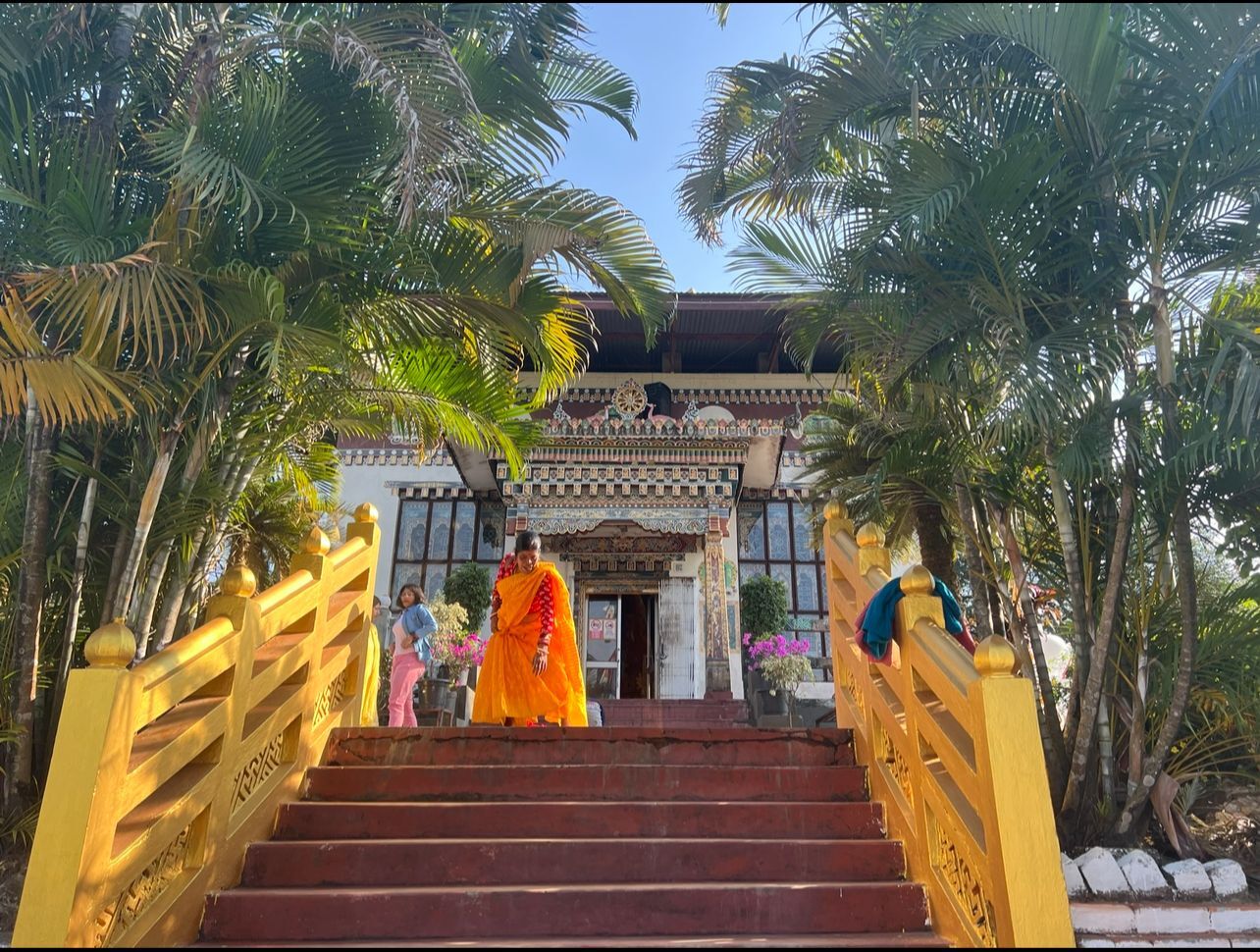
Richending Goemba, winter slows everything down. The uneven stone stairs hold the night’s chill

and prayer flags hang stiff and faded. Breath becomes visible. Movement becomes deliberate.

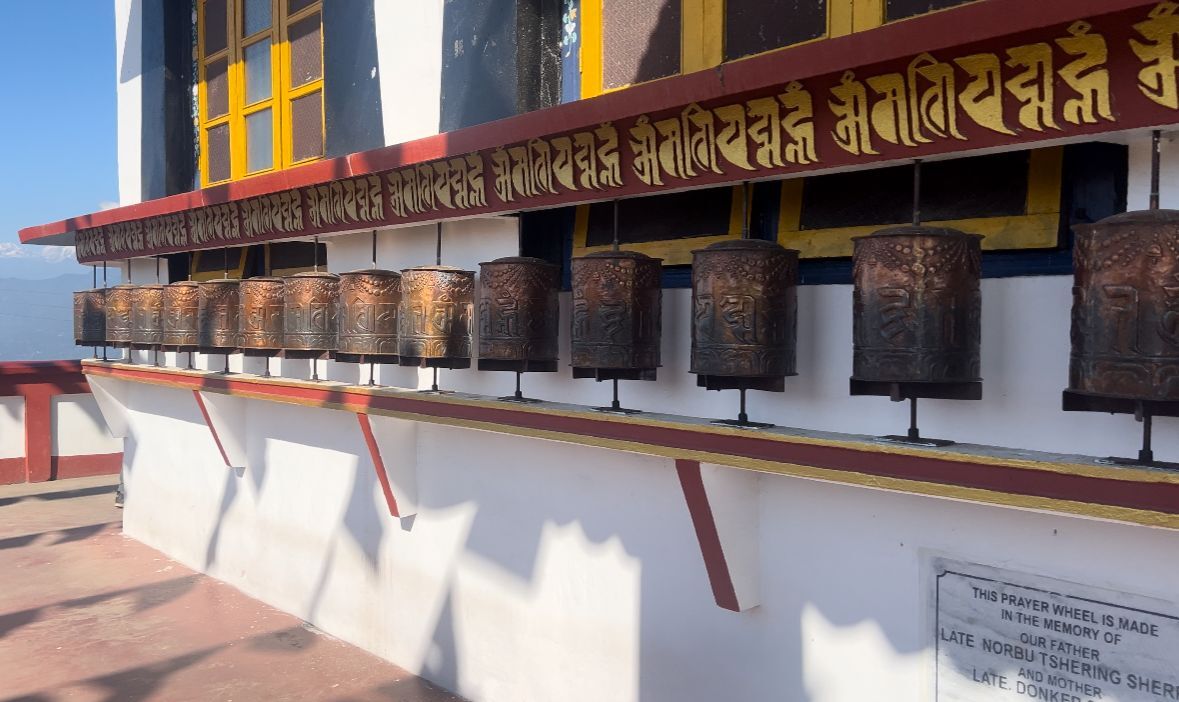
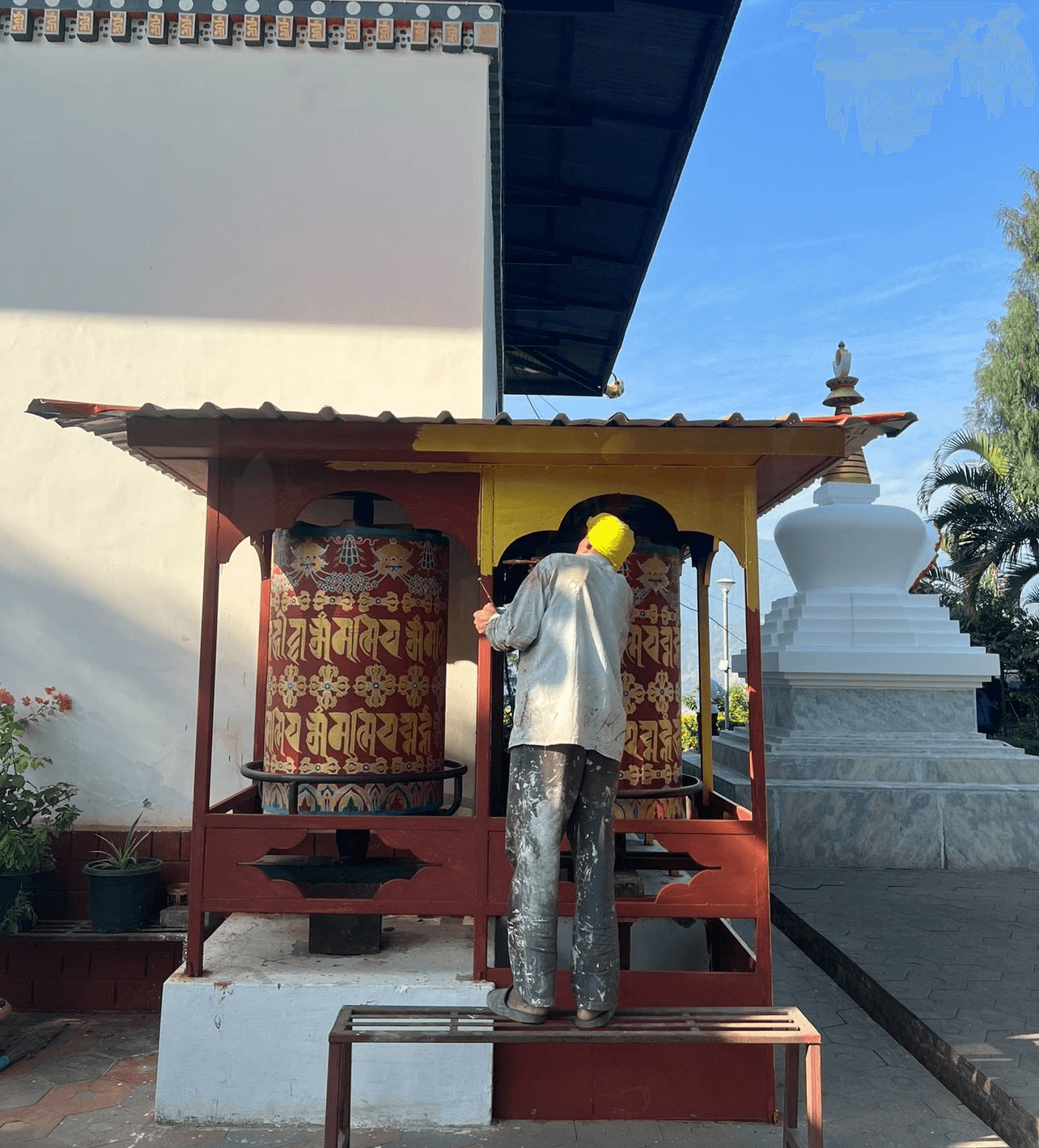
A determined worker repaints the red rims of the prayer wheels, coating them with a layer of fresh

gold. The wheels still carried the same prayers, spun by the same hands, turned by the same wind.

Yet something in the space felt newly attentive, newly alive. Nothing essential had changed and yet something had begun again. There is a lasting misconception that rebirth must be dramatic. We carry a vision that something external must be conquered or something internally would be violently undone. We imagine transformation as a battlefield: a sword driven through flesh and bone, an old self collapsing so that a new one may rise toward the white light. Only after visible destruction, we believe, can the process of birth begin again.

This dramatization follows us everywhere, even into how we understand new beginnings today. Rebrands must be loud. Reinvention must be announced. Growth must be earned through suffering severe enough to be legible to others. But what if rebirth does not require rupture? What if new beginnings are quieter than we expect?
We often ask whether rebirth can occur within a single lifetime, as though life were a rigid container and change an interruption within it. Yet lived experience suggests otherwise. A person takes a different route to work and feels momentarily awake. Someone dyes their hair a color far from its natural shade and notices a subtle shift in how they occupy their body. Another pauses to feed a stray on their way home, and something softens, rearranges. These moments are small. They don’t erase the past or announce a future. But something lights up within us. A habit loosens. A divergence forms.

Why do we refuse to call this rebirth?


Perhaps because we have come to associate rebirth only with catastrophe or spectacle. Everyone seeks a new beginning, but few are willing to go through the kind of ‘death’ that does not appear impressive. Not a physical death, but a quieter one: letting go of a dream to make space for a new one, releasing an identity that once protected us; loosening our grip on who we think we must continue to be. Of course, not all stillness is renewal, and not every subtle shift is growth. Still, change does not need to completely collapse to be real. In Buddhism, impermanence—Anicca—is not a mere observation but a foundational truth. All things, physical and mental, are in constant flux: arising, changing and passing away. Suffering arises not because things change, but because we cling to what cannot remain. Peace comes not from preserving permanence, but from understanding that there is none. From this perspective, the idea of a ‘fresh start’ is not a single event. It is not confined to birth myths or post-death narratives. Rather, renewal is woven into every moment. The person you were a second ago has already ceased to exist. A slightly altered version has taken their place—not entirely new, not entirely same.


This is the art of perpetual renewal. Perpetual renewal does not promise comfort. It asks us to stay present to change without demanding certainty from it. To resist freezing ourselves into identities that once worked but no longer respond.

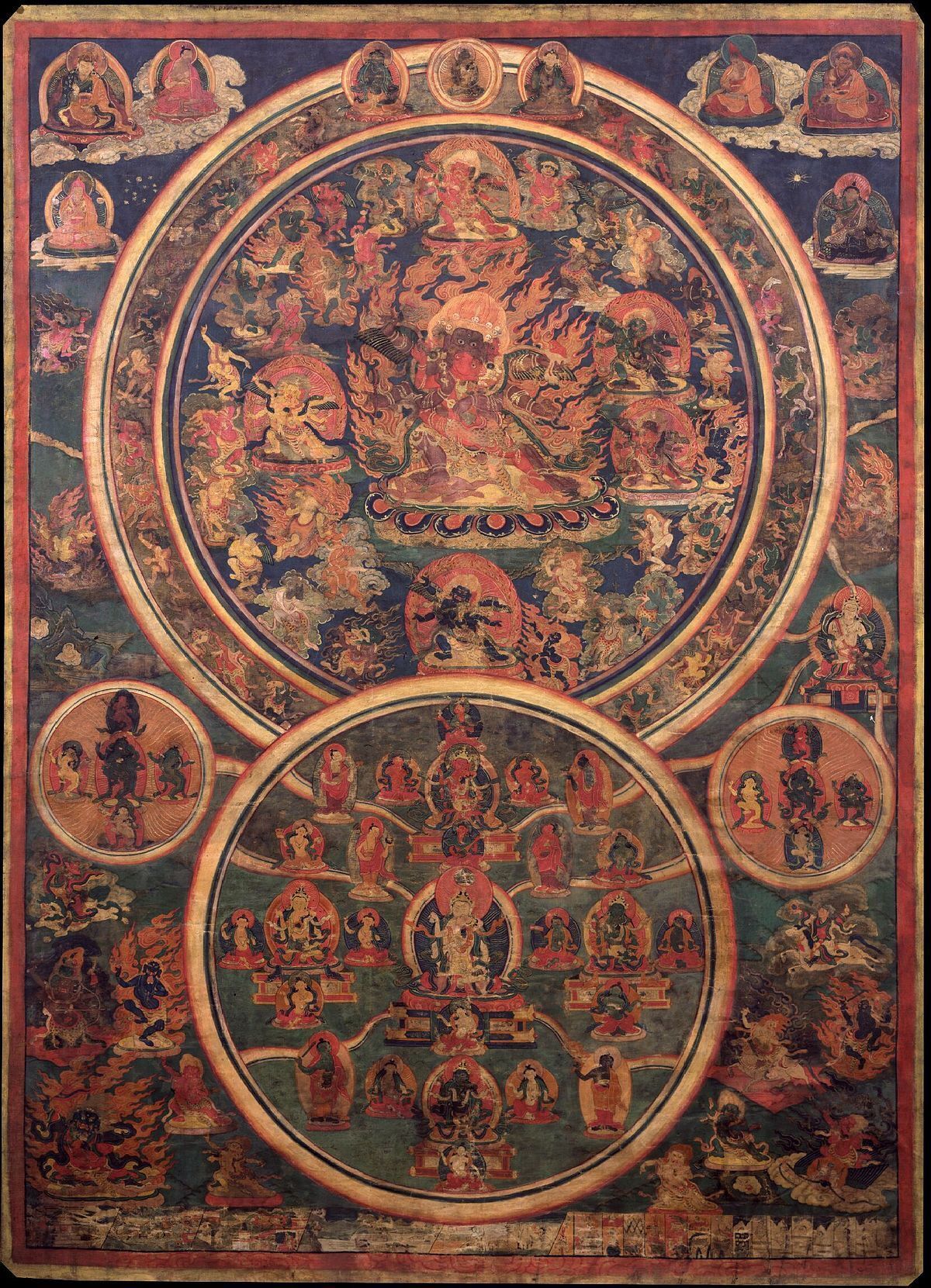
However, renewal does not move in a straight line. It lingers. It hesitates. There are moments when what has been is fading and what we will become has not arrived yet. These quiet gaps and uneasy intervals are easy to dismiss, yet they are where change quietly gathers itself. Bardo in Tibetan Buddhism is a liminal state between death and rebirth. It is often described as a passage between lifetimes, but it can also be understood psychologically as a gap; a pause. A space where old habits loosen and new patterns are not yet fixed. We enter Bardo more often than we realize. Between careers. Between versions of ourselves. Between the identities we have outgrown and the ones we are not yet ready to claim. These spaces are uncomfortable precisely because they resist immediate definition. They do not offer instant narratives but they hold possibility. Rebranding, when done honestly, is not the rejection of the past but the courage to remain in this in-between space without rushing to cover it up. It is the willingness to repaint the rims and borders without discarding the wheel.

This is why the golden prayer wheels feel newly alive. Not because they are new, but because someone paid attention to them. The prayers were not replaced. The motion did not change. Only the surface was renewed, enough to invite fresh presence without denying what came before. A true rebrand does not announce that you are someone else. It reveals that you were never static to begin with. And maybe that is what new beginnings really are—not moments when everything changes, but moments when we finally notice that everything already is. Like the prayer wheels, we continue to turn. The prayers continue to move through us. However, this time through the practice of noticing, we allow the surface to be renewed, so that what has always been in motion can be seen again, clearly, in the light.

Keep Reading

0%

Keep Reading

0%