
What compels us to act before we fully understand? This piece considers movement not as impulse alone, but as a force that shapes what follows, both within ourselves and in the spaces we create for others.


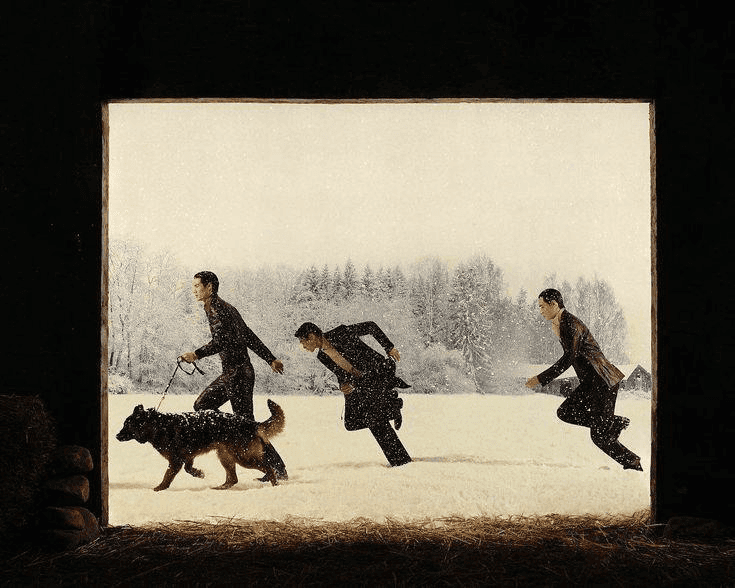
Murder in the Snow | Leslie Zhang
Murder in the Snow | Leslie Zhang
There are moments when something begins before we understand it. A shift that cannot yet be explained, a decision that feels immediate but not fully formed. You move toward something without knowing exactly why, or where it will lead, and by the time you try to account for it, you are already in motion. In the thick of it, if we may. We often describe this kind of movement as instinct, as something that arrives too quickly to be trusted, something without shape or solid ground. But that assumes clarity comes first, that we know before we act. Often, we don’t.
Some forms of movement precede understanding. They emerge as a response to something felt but not yet articulated, and what follows is not always explanation, but recognition— a slow realisation that something had already begun. In this sense, what moves us is not always fully ours. It can be fleeting, passing through us before we can name it, and going on to shape the spaces we occupy.
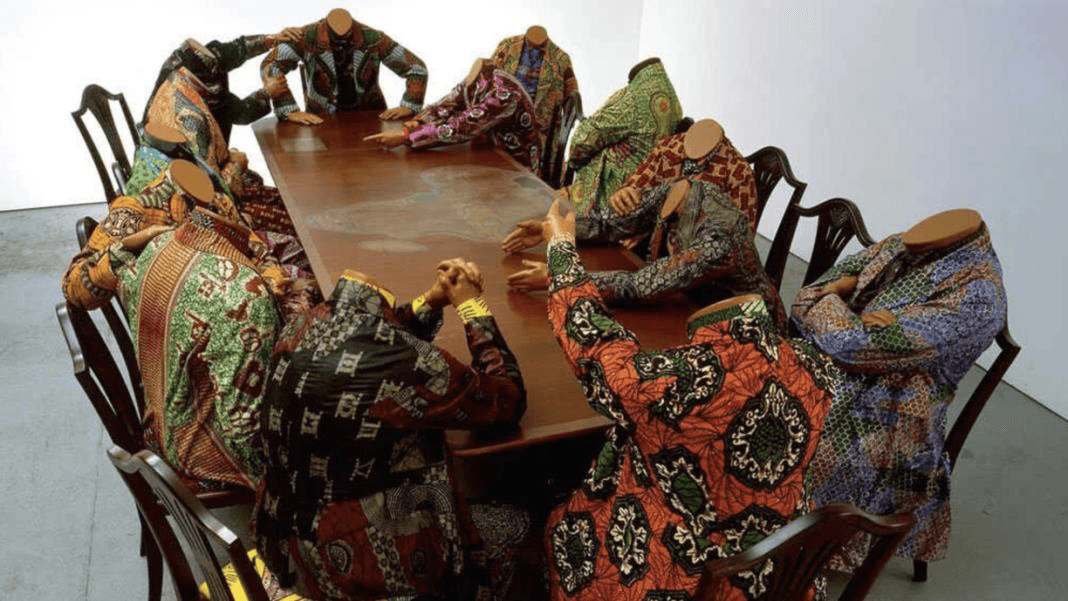
Scramble for Africa | Yinka Shonibare
This is perhaps most visible in moments of creating. A sentence appears before its structure is clear, a form takes shape before its intention is known. Something is assembled, rearranged, abandoned, returned to. The work moves ahead of the person making it, and what is produced does not always follow from a plan, but from decisions that feel immediate and difficult to resist. To move in this way is to accept a certain lack of clarity, but it is also to open something, to make space.
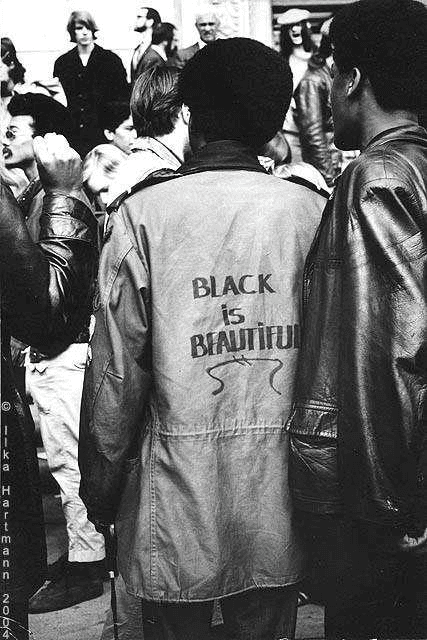
Because what begins in this way does not always remain contained. It can extend and reorganise what is around it. A gesture becomes a direction, a decision becomes a structure, and what was once tentative becomes something others can enter and inhabit. This movement is not always visible at first; sometimes it begins as a shift in perception— subtle, internal, but no less decisive. We see this in how certain ideas move through people and reshape how they exist. For instance, Steve Biko’s insistence that “Black is beautiful” did not simply name something that already existed, brewing quietly; it initiated a reorientation. A way of seeing that moved outward into how people carried themselves and how they occupied space. What began as a declaration became a condition others could enter.
That quiet resolution, the dance between your heart and instinct, knowing before your body catches up. That is the moment, the tension, the thread we pull at when we move.
Artists like Yinka Shonibare take up this movement through material, reworking inherited forms into something that shifts how they are seen and understood, challenging what is already known. In this way, what begins as a gesture, often driven by a quiet insistence, does not remain contained. It gathers, repeats, and begins to circulate. What was once singular becomes part of a wider visual language. Movement, then, is not only personal. It produces something beyond itself, a lineage that extends beyond the individual.
But it is not without risk. The same force that allows something to begin can also carry it forward too quickly. A direction is followed without being questioned. What was meant to be ‘for now’ becomes fixed. And what begins in intensity does not always return in the same way. What opens can also close if it is not returned. What begins as momentum can harden into something unmoving.
To continue moving without reflection is to mistake change for completion. To refuse movement entirely and ignore that voice, however, is to remain suspended. So, where does one sit in this tension?
Artists like Yinka Shonibare take up this movement through material, reworking inherited forms into something that shifts how they are seen and understood, challenging what is already known. In this way, what begins as a gesture, often driven by a quiet insistence, does not remain contained. It gathers, repeats, and begins to circulate. What was once singular becomes part of a wider visual language. Movement, then, is not only personal. It produces something beyond itself, a lineage that extends beyond the individual.
But it is not without risk. The same force that allows something to begin can also carry it forward too quickly. A direction is followed without being questioned. What was meant to be ‘for now’ becomes fixed. And what begins in intensity does not always return in the same way. What opens can also close if it is not returned. What begins as momentum can harden into something unmoving.
To continue moving without reflection is to mistake change for completion. To refuse movement entirely and ignore that voice, however, is to remain suspended. So, where does one sit in this tension?
Having come to terms with the fact that we are always in motion, the question becomes what we allow that movement to become. Once the initial smoke clears and intensity settles, we are left with a choice: to treat what arrived as something fleeting, or to stay with it long enough to understand what it has made possible— not only for ourselves, but for others.
As a collective, a global village, what moves us is never only individual. It leaves traces, builds conditions, creates spaces others step into—in how they think, move, and create—often without knowing where they began.
That impulse, that itch, does not only move you. It is what your movement makes possible for others to enter.
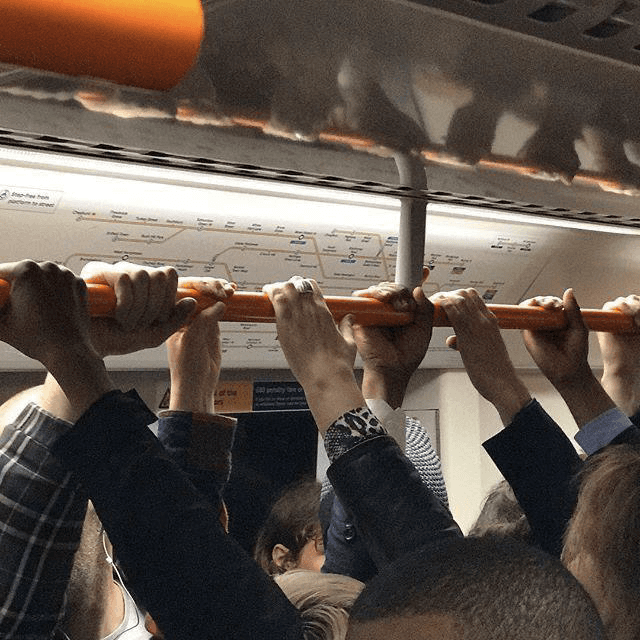
Scramble for Africa | Yinka Shonibare
Hanna Nilsson
Hanna Nilsson
Having come to terms with the fact that we are always in motion, the question becomes what we allow that movement to become. Once the initial smoke clears and intensity settles, we are left with a choice: to treat what arrived as something fleeting, or to stay with it long enough to understand what it has made possible— not only for ourselves, but for others.
As a collective, a global village, what moves us is never only individual. It leaves traces, builds conditions, creates spaces others step into—in how they think, move, and create—often without knowing where they began.
That impulse, that itch, does not only move you. It is what your movement makes possible for others to enter.
This is perhaps most visible in moments of creating. A sentence appears before its structure is clear, a form takes shape before its intention is known. Something is assembled, rearranged, abandoned, returned to. The work moves ahead of the person making it, and what is produced does not always follow from a plan, but from decisions that feel immediate and difficult to resist. To move in this way is to accept a certain lack of clarity, but it is also to open something, to make space.
Because what begins in this way does not always remain contained. It can extend and reorganise what is around it. A gesture becomes a direction, a decision becomes a structure, and what was once tentative becomes something others can enter and inhabit. This movement is not always visible at first; sometimes it begins as a shift in perception— subtle, internal, but no less decisive. We see this in how certain ideas move through people and reshape how they exist. For instance, Steve Biko’s insistence that “Black is beautiful” did not simply name something that already existed, brewing quietly; it initiated a reorientation. A way of seeing that moved outward into how people carried themselves and how they occupied space. What began as a declaration became a condition others could enter.
That quiet resolution, the dance between your heart and instinct, knowing before your body catches up. That is the moment, the tension, the thread we pull at when we move.
Keep Reading
0%
Keep Reading
0%