
For most of our readers, the term "red pill" would naturally bring to mind two obvious associations: the sci-fi classic, which the concept stems from: The Matrix, and the manosphere - a highly popular ideological movement embodied by controversial fi gures like Andrew Tate or Sneako. What if, however, the red pill could stand for more than that? In this article we look into how the Red Pill can be reclaimed by the artistic community and become a symbol of the curious.


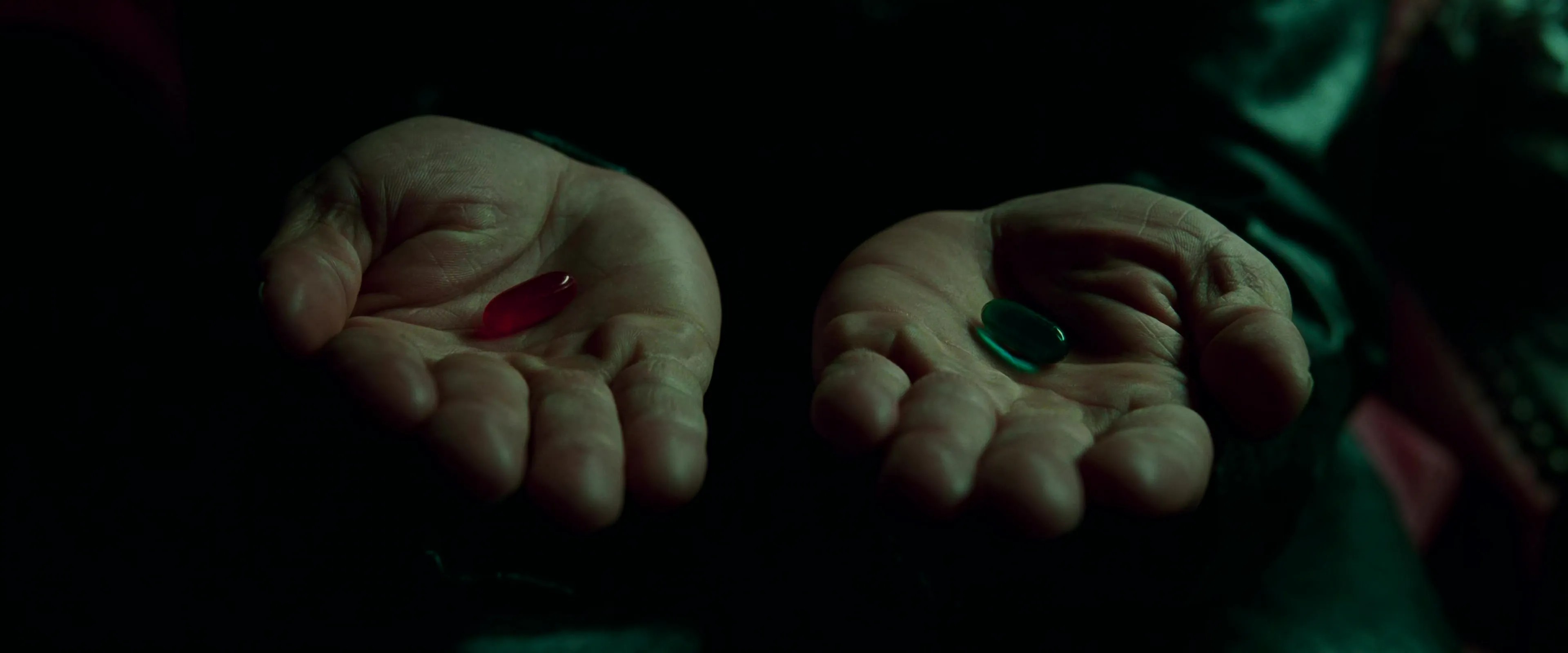
The Matrix (1999)
The Matrix (1999)
Looking back at the pieces of visual artistry that have had a strong impact on developing a modern symbolism, it is hard to look past the 1999 film by The Wachowski sisters: The Matrix. Looking back at the film 27 years after its premiere, it is also not difficult to see why this is the case. The sci-fi classic, set in a reality where a mischievous AI system has taken control of the world, trapping humanity in a seamless simulation of the Real World, always seemed to be ahead of its time in terms of the themes it engaged with. The gloriously iconic scene, in which the main character - Neo, is presented with a choice between taking a blue pill and going back to living in the simulation he called home, or taking a red pill, which would open his mind to the bleak reality of what the world had become has, for better or for worse, transcended into mainstream pop-culture and has remained there ever since.
Adopted by the infamous manosphere, as Louis Theroux demonstrated in his mind-blowing Netflix documentary: Inside the Manosphere (2026), the Red Pill has become a symbol of resistance against, you guessed it, The Matrix.

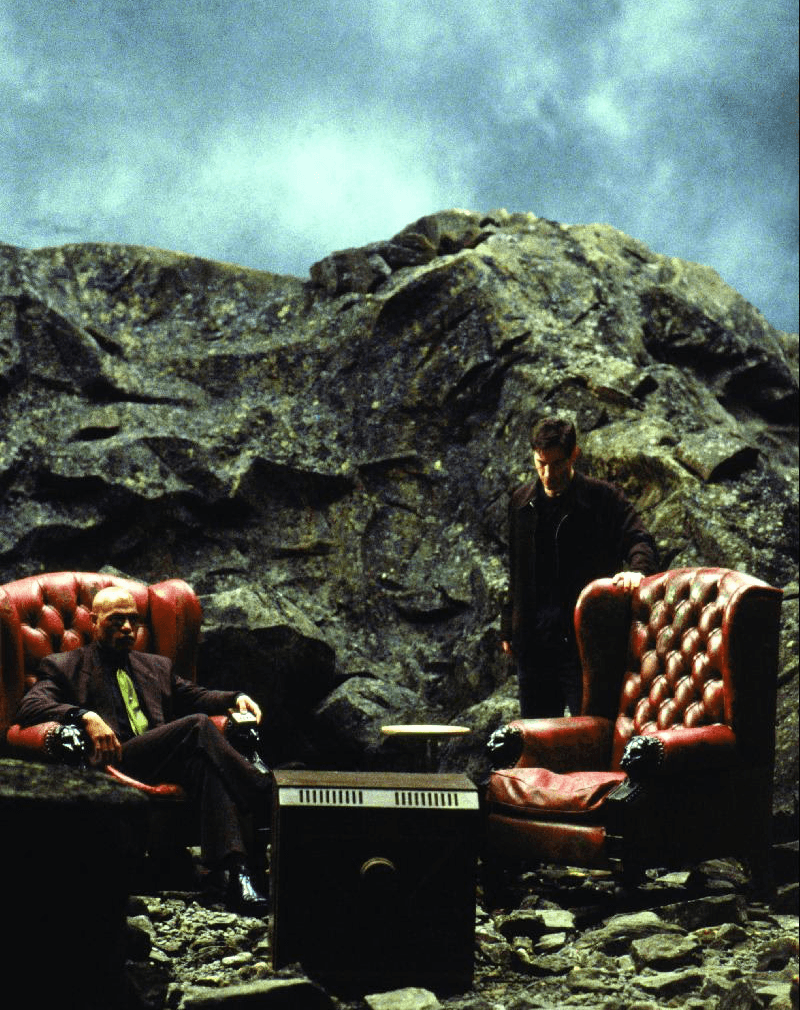
The Matrix (1999)
Mulholland Drive (2001)
Of course, in this context, The Matrix takes on a different meaning than the one that was originally intended by the Wachowskis. As defined by the notorious alt-right/toxic masculinity streamer - HS TikkyTokky, The Matrix are "the colluding powers at the top of the world that want to keep everyone down, broke, keep the slave mindset going", which crucially aims to disempower men. Taking the red pill, for HS and his many counterparts, is then a way of rejecting modernity and escaping this imagined "system" through a combination of racist, misogynistic and homophobic behaviours. The absurdity of this approach becomes even more obvious when coupled with the fact that the directors of the film are, of course, two transsexual women. The aim of this article, however, is not to argue against these ridiculous interpretations of The Matrix, but to propose an alternative interpretation of the symbolism which stems from the film. An interpretation for artists.
What if taking the Red Pill was actually a metaphor for remaining curious?
After all, those who have ever tried becoming more knowledgeable in a given subject were likely faced with a quick realisation that attaining more knowledge does not necessarily result in having all the answers.
On the contrary, the more you know about a subject, the more questions you tend to have, and that's ok. Perhaps the Red Pill should not be a symbol of magically ascending over some imagined social system and into a state of absolute control over one's destiny and becoming all-knowing, but rather a symbol of curiosity and questioning who we are and what the world around us is.
Art, then, is a perfect vehicle for such reinterpreted Red Pill consumption.
After all, how many times have you seen an abstract painting and wondered: "What was that about?" How many times have you seen a film which has made you rethink your whole approach to life?
Art is not about giving answers and explanations.
It is about asking questions, even (or especially) when you do not know the answer.
The beauty of it all lies in the fact that through the infinite art forms which we have at our disposal, we do not have to limit ourselves to questions we can verbally ask. Perhaps some questions can only be captured through paint, film or 3D design.
This desire and love for asking questions from oneself and from one's audience is one that we have already seen in the work of some of our favourite artists. Think of David Lynch - the famed director of cult classics like Mulholland Drive (2001) or Twin Peaks (1989). His signature dream-like style seemed to, without fault, leave viewers with countless more questions than they had before entering the cinema. It was exactly this ability of awakening one's curiosity which made Lynch one of the best-regarded directors of all time. Interestingly enough, his preference for leaving questions unanswered was so strong that throughout his career, he notoriously refused to explain his films.
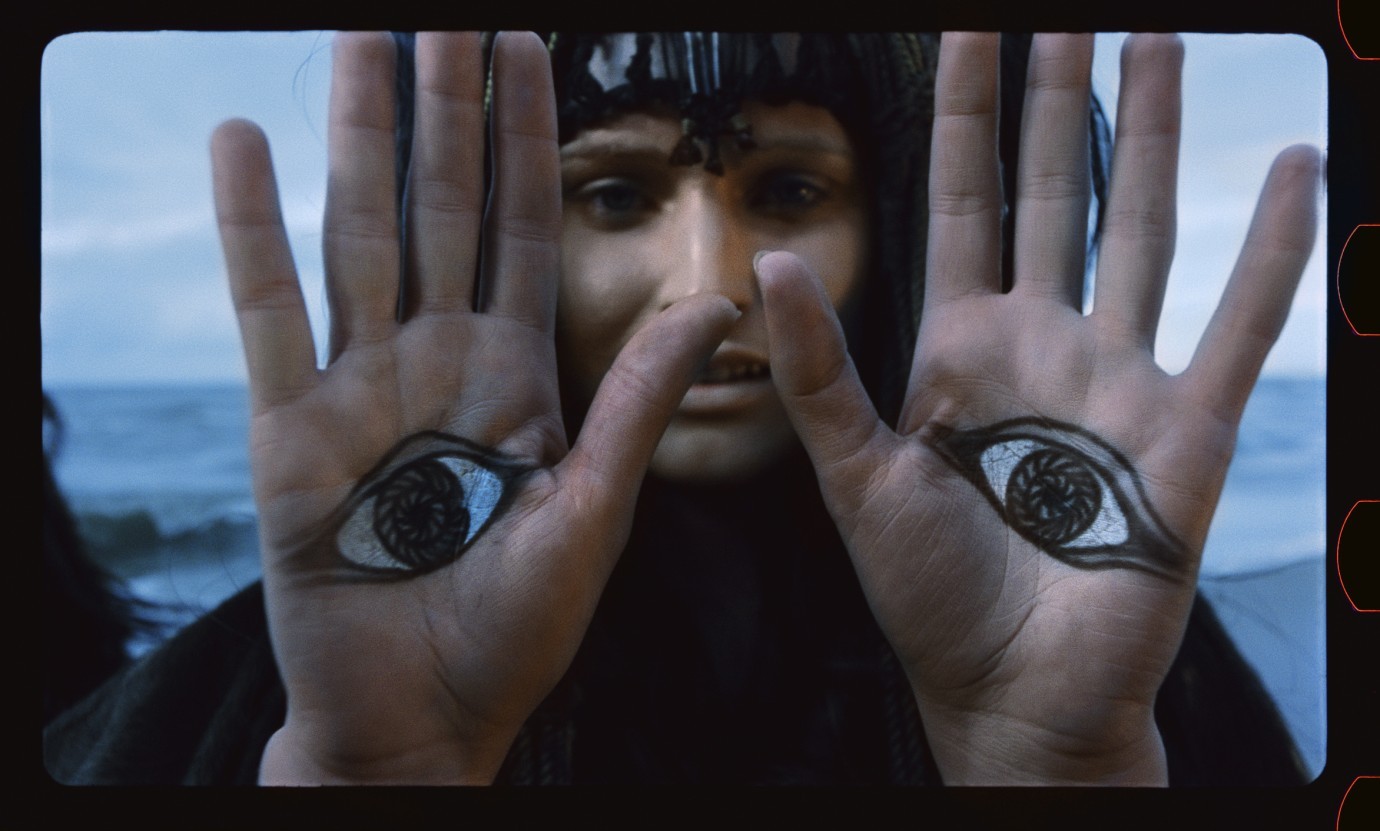
Another example would be Andrzej Żuławski's sci-fi classic On the Silver Globe (1988), which has made an unlikely return into the limelight in recent years. The three-hour-long unfinished masterpiece manages to somehow ask so many questions on the nature of humanity that one would have difficulties in trying to decipher what the intended message of the film was, aside from awakening a wild sense of internal curiosity in its viewers.
Art is not about giving answers and explanations.
It is about asking questions, even (or especially) when you do not know the answer.
The beauty of it all lies in the fact that through the infinite art forms which we have at our disposal, we do not have to limit ourselves to questions we can verbally ask. Perhaps some questions can only be captured through paint, film or 3D design.
This desire and love for asking questions from oneself and from one's audience is one that we have already seen in the work of some of our favourite artists. Think of David Lynch - the famed director of cult classics like Mulholland Drive (2001) or Twin Peaks (1989). His signature dream-like style seemed to, without fault, leave viewers with countless more questions than they had before entering the cinema. It was exactly this ability of awakening one's curiosity which made Lynch one of the best-regarded directors of all time. Interestingly enough, his preference for leaving questions unanswered was so strong that throughout his career, he notoriously refused to explain his films.
Another example would be Andrzej Żuławski's sci-fi classic On the Silver Globe (1988), which has made an unlikely return into the limelight in recent years. The three-hour-long unfinished masterpiece manages to somehow ask so many questions on the nature of humanity that one would have difficulties in trying to decipher what the intended message of the film was, aside from awakening a wild sense of internal curiosity in its viewers.
What is it, therefore, that connects those two filmmakers? It is their shared love of exactly the type of curiosity which the Red Pill should embody.
The Red Pill does not have to be a symbol of hatred and bigotry. It was never intended to be that. In art lies a chance to reclaim its symbolic value in the name of curiosity and through the love of questions.
Mulholland Drive (2001)
On the Silver Globe (1988)
On the Silver Globe (1988)
The Matrix (1999)
What is it, therefore, that connects those two filmmakers? It is their shared love of exactly the type of curiosity which the Red Pill should embody.
The Red Pill does not have to be a symbol of hatred and bigotry. It was never intended to be that. In art lies a chance to reclaim its symbolic value in the name of curiosity and through the love of questions.
Of course, in this context, The Matrix takes on a different meaning than the one that was originally intended by the Wachowskis. As defined by the notorious alt-right/toxic masculinity streamer - HS TikkyTokky, The Matrix are "the colluding powers at the top of the world that want to keep everyone down, broke, keep the slave mindset going", which crucially aims to disempower men. Taking the red pill, for HS and his many counterparts, is then a way of rejecting modernity and escaping this imagined "system" through a combination of racist, misogynistic and homophobic behaviours. The absurdity of this approach becomes even more obvious when coupled with the fact that the directors of the film are, of course, two transsexual women. The aim of this article, however, is not to argue against these ridiculous interpretations of The Matrix, but to propose an alternative interpretation of the symbolism which stems from the film. An interpretation for artists.
What if taking the Red Pill was actually a metaphor for remaining curious?
After all, those who have ever tried becoming more knowledgeable in a given subject were likely faced with a quick realisation that attaining more knowledge does not necessarily result in having all the answers.
On the contrary, the more you know about a subject, the more questions you tend to have, and that's ok. Perhaps the Red Pill should not be a symbol of magically ascending over some imagined social system and into a state of absolute control over one's destiny and becoming all-knowing, but rather a symbol of curiosity and questioning who we are and what the world around us is.
Art, then, is a perfect vehicle for such reinterpreted Red Pill consumption.
After all, how many times have you seen an abstract painting and wondered: "What was that about?" How many times have you seen a film which has made you rethink your whole approach to life?
Keep Reading
0%
Keep Reading
0%