
Before first impressions happen in person, they happen on screens. Here, we explore how personal branding has reshaped the way we introduce ourselves— and what we risk losing when identity becomes a summary.


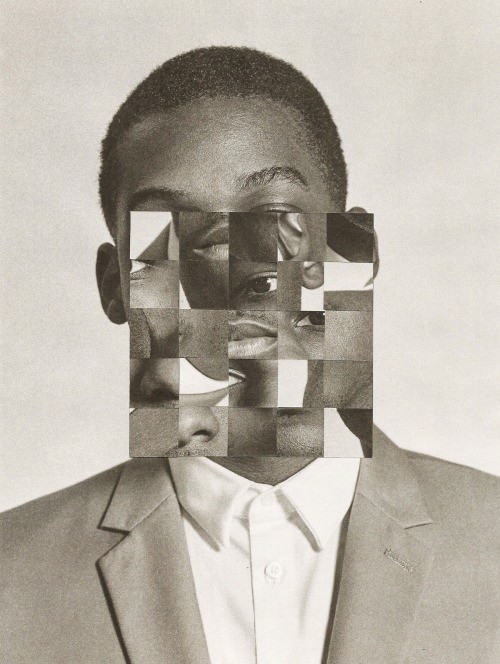
https://helenrobertson.tumblr.com/post/150781962888
https://helenrobertson.tumblr.com/post/150781962888
Before we meet each other, we read each other.
A bio. A caption. A headline. A grid of carefully chosen photos. In a few seconds, we are given the outline of a person before we ever hear their laugh or learn how their voice sounds in a room. Before we say hello or shake hands. I catch myself doing it all the time; forming a first impression before a first conversation has even begun. What about you?
You see, somewhere along the way, identity stopped being something we slowly revealed when people would gradually peel away at it, through intentional efforts to get the other. Identity has become something we present immediately. A summary. A concept. A version of ourselves designed to make sense at a glance.
What feels like eons ago, personal branding belonged to companies, celebrities and political campaigns. Now it belongs to anyone with a profile. Hence, the modern self arrives packaged: legible, consistent, and recognisable. In a world where attention is currency and visibility is endless, this shift feels almost inevitable. If you want to be seen, you have to be understood quickly.
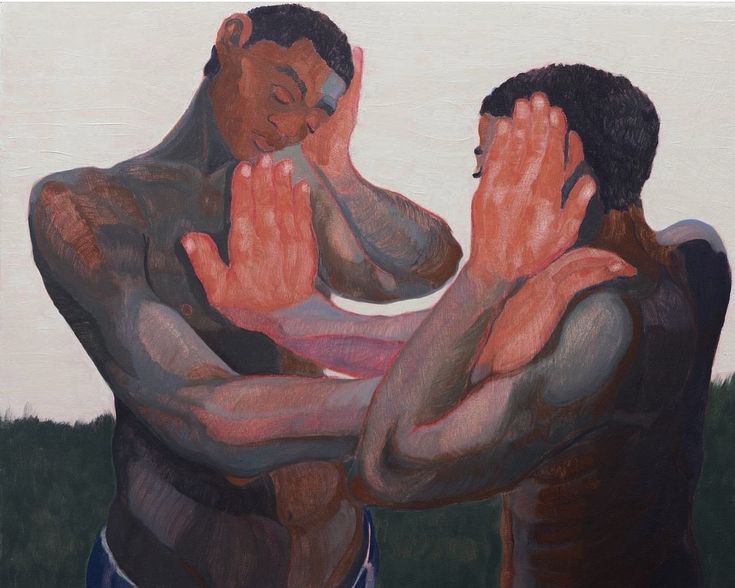
Stethoscopes (2023) - Deven Pryce Oil on canvas over panel 30” x 24”
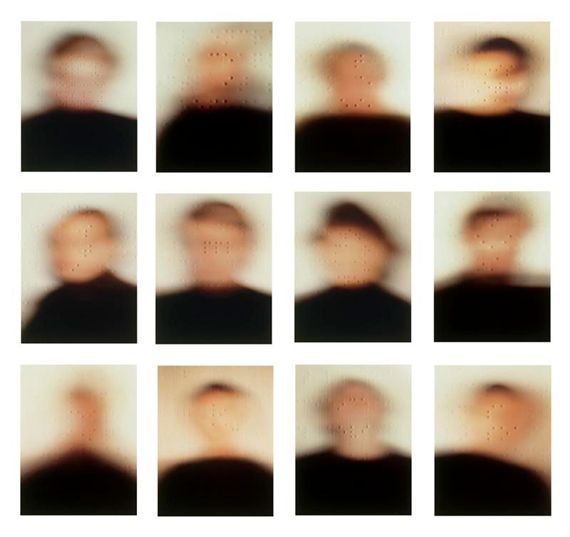
https://www.mutualart.com/Artwork/SELF-PORTRAITS/99A6BE2BFFCDCA41
But what is identity, really? If culture can be described as humanity in motion, then identity is the quieter cousin: the internal rhythm that shapes how you move through the world. It is the accumulation of memory, desire, language, taste, belief, fear, location, lineage, and becoming. Identity is not a slogan. It’s a life. And yet, our digital environments reward the opposite: a self that is condensed, consistent, and cleanly categorised.
Look at the language we use to introduce ourselves. We’ve begun to speak in titles: strategist, creative, founder, writer. Dating apps reduce personality to prompts and punchlines, as if chemistry can be optimised with the right combination of hobbies and humour. As though connection can be fast tracked. Online, identity is often distilled into neat, shareable fragments; aesthetics, labels, and micro-identities that promise clarity in just a few words. Are you a Lauryn Hill girl? Maybe your aesthetic is circa-2018 Playboi Carti? In a few words, someone can form a sense of who you are— your brand identity, so to speak.
Granted, there is something comforting about this. The ability to clearly name yourself and your position can feel grounding. Labels can also create community. Clarity can open doors. For creatives, especially, a “brand” can make work discoverable in a crowded landscape. For many people, defining identity online is not vanity but survival. To do so, really is curation. So to curate one’s personal landscape, one’s niche, there is authority and comfort there.
But, branding comes with a quiet demand: consistency. A brand should make sense. It should be recognisable. It should not contradict itself too loudly. And this is where the tension begins, because being human is inherently inconsistent.
We change our minds. We outgrow interests. We choose our favourites only for them to stop resonating. We shed versions of ourselves without announcing it. Entire chapters close quietly while new ones begin. Real identity is messy, contradictory and in motion— yet the internet often asks us to remain the version of ourselves that people learned first. You’ve heard this before, the great “rebrand”; the grandiosity that comes with changing. Online, rebrands come with big unveilings, anticipated rollouts and roaring opinions. Contrastingly, the “rebands” we have in real life are much quieter. Most are not privy.
When identity becomes branding, something subtle is lost: the slow unfolding of people. We meet each other already pre-captioned. Already categorised. Already translated into a digestible narrative. Mystery, once a natural part of human connection, starts to feel inefficient— lacklustre even.
But, branding comes with a quiet demand: consistency. A brand should make sense. It should be recognisable. It should not contradict itself too loudly. And this is where the tension begins, because being human is inherently inconsistent.
We change our minds. We outgrow interests. We choose our favourites only for them to stop resonating. We shed versions of ourselves without announcing it. Entire chapters close quietly while new ones begin. Real identity is messy, contradictory and in motion— yet the internet often asks us to remain the version of ourselves that people learned first. You’ve heard this before, the great “rebrand”; the grandiosity that comes with changing. Online, rebrands come with big unveilings, anticipated rollouts and roaring opinions. Contrastingly, the “rebands” we have in real life are much quieter. Most are not privy.
When identity becomes branding, something subtle is lost: the slow unfolding of people. We meet each other already pre-captioned. Already categorised. Already translated into a digestible narrative. Mystery, once a natural part of human connection, starts to feel inefficient— lacklustre even.
Perhaps this is the paradox of modern identity. We have more freedom than ever to define ourselves, yet we feel increasing pressure to define ourselves quickly. To be interesting. To be understandable. To be searchable. Presenting ourselves is not new; humans have always curated impressions. The difference now is scale. The difference is speed. The difference is that the audience is constant.
So perhaps the question is not whether identity can be branded, because clearly, it can. Rather, the question is whether identity should have to be packaged at all times. Whether we can still make room for the unfinished self. The evolving self. The version of a person that cannot be summarised in a headline. Whether we can remember that a person is not a headline, not a bio, not a concept, but a conversation.
So, if I ask you, who are you? What would you say? And if you ask someone the same question — what would you expect to hear?
https://www.mutualart.com/Artwork/SELF-PORTRAITS/99A6BE2BFFCDCA41
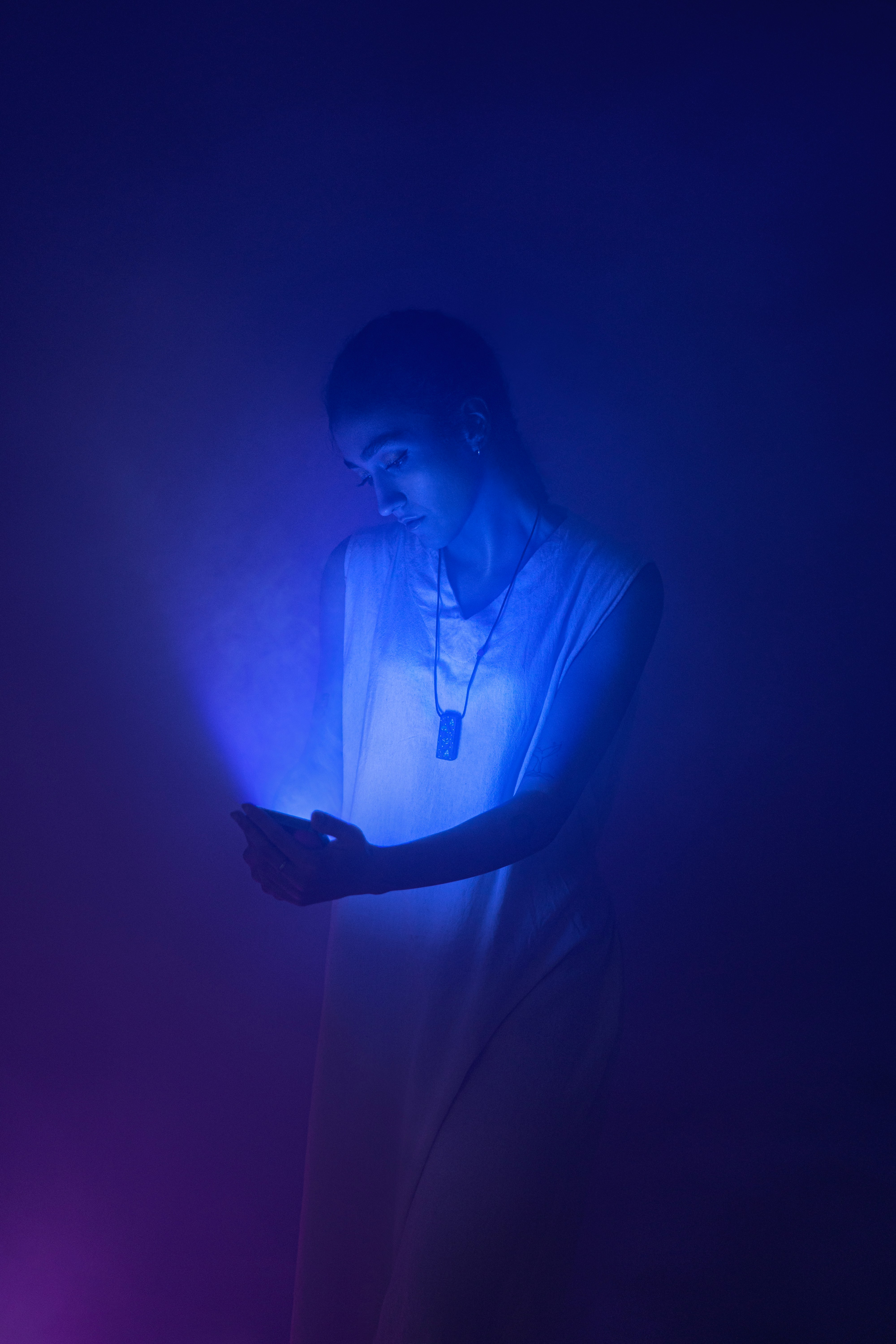
https://unsplash.com/photos/a-man-standing-in-the-dark-holding-a-cell-phone-PJubHYJsjns
https://unsplash.com/photos/a-man-standing-in-the-dark-holding-a-cell-phone-PJubHYJsjns
Stethoscopes (2023) - Deven Pryce Oil on canvas over panel 30” x 24”
Perhaps this is the paradox of modern identity. We have more freedom than ever to define ourselves, yet we feel increasing pressure to define ourselves quickly. To be interesting. To be understandable. To be searchable. Presenting ourselves is not new; humans have always curated impressions. The difference now is scale. The difference is speed. The difference is that the audience is constant.
So perhaps the question is not whether identity can be branded, because clearly, it can. Rather, the question is whether identity should have to be packaged at all times. Whether we can still make room for the unfinished self. The evolving self. The version of a person that cannot be summarised in a headline. Whether we can remember that a person is not a headline, not a bio, not a concept, but a conversation.
So, if I ask you, who are you? What would you say? And if you ask someone the same question — what would you expect to hear?
But what is identity, really? If culture can be described as humanity in motion, then identity is the quieter cousin: the internal rhythm that shapes how you move through the world. It is the accumulation of memory, desire, language, taste, belief, fear, location, lineage, and becoming. Identity is not a slogan. It’s a life. And yet, our digital environments reward the opposite: a self that is condensed, consistent, and cleanly categorised.
Look at the language we use to introduce ourselves. We’ve begun to speak in titles: strategist, creative, founder, writer. Dating apps reduce personality to prompts and punchlines, as if chemistry can be optimised with the right combination of hobbies and humour. As though connection can be fast tracked. Online, identity is often distilled into neat, shareable fragments; aesthetics, labels, and micro-identities that promise clarity in just a few words. Are you a Lauryn Hill girl? Maybe your aesthetic is circa-2018 Playboi Carti? In a few words, someone can form a sense of who you are— your brand identity, so to speak.
Granted, there is something comforting about this. The ability to clearly name yourself and your position can feel grounding. Labels can also create community. Clarity can open doors. For creatives, especially, a “brand” can make work discoverable in a crowded landscape. For many people, defining identity online is not vanity but survival. To do so, really is curation. So to curate one’s personal landscape, one’s niche, there is authority and comfort there.
Keep Reading
0%
Keep Reading
0%