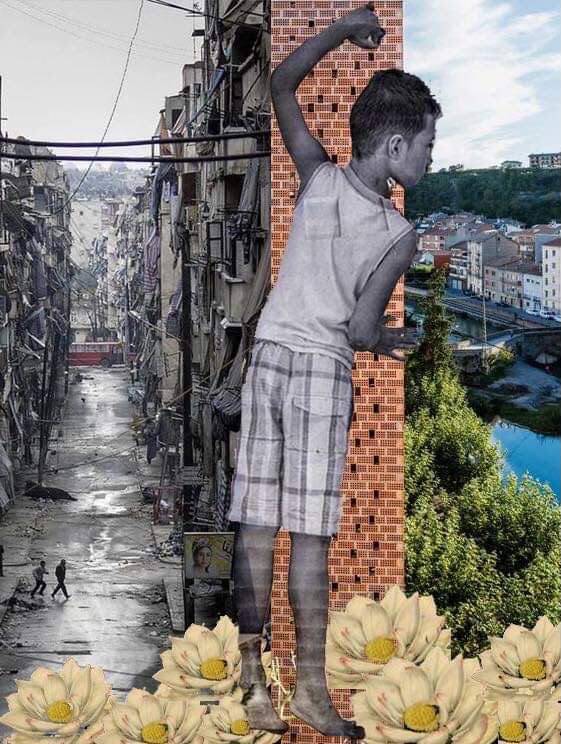
To doubt is to be, but who exactly has the privilege to doubt?

To doubt is to take a genuine pause before accepting the fact in front of you. It is to question what appears truly certain and to ask whether there might be another explanation for the dilemma presented. We often experience doubt as uncomfortable because certainty gives us something that uncertainty cannot: stability. To be certain is to feel that the ground beneath us is solid. To doubt is to discover that the ground is actually lava.
Still, in a philosophical regard, doubt is not necessarily the enemy of knowledge. It can also indicate the beginning of it. So, to doubt in this case becomes an interruption. It prevents the first answer that pops into someone’s head from becoming the final truth. Philosophy, at its most fundamental level, begins with disruption. It embodies the refusal to accept something simply because it has always been accepted.
The act of questioning has been celebrated immensely by the French polymath, René Descartes. He began by questioning almost everything he thought he knew. Could his senses deceive him? Could the world be an illusion? Could his memories be so utterly wrong? His radical doubt was an attempt to discover whether there was anything that could remain certain even after everything else had been questioned.
The answer to all the above was found in the act of questioning itself. If Descartes was doubting, then he had to be thinking. And if he was thinking, there had to be a thinker. He could doubt the existence of his body, his surroundings or even the reliability of his senses, but he could not doubt the existence of the person doing the doubting. The very attempt to deny his existence confirmed it.
The space caused between the probable physical body and dissatisfaction toward a thought occurring is what made the existence possible to comprehend.
This realization made Descartes settle on cogito, ergo sum. ‘I think, therefore I am.’
The vitality of the cogito is not simply that Descartes discovered that he existed. It is that doubt itself became the path to certainty. He carved a way through uncertainty. Doubt became productive because it forced him to separate what he merely assumed from what he could actually justify.
Deeply liberating is this kind of doubt that allows a person to question inherited beliefs, challenge authority, and reconsider what might appear obvious. Certainty becomes provisional. It reiterates the thought that you may be wrong, and therefore you should keep thinking. Keep doubting. Keep challenging.
Seems simple, doesn’t it?
Beneath this surface, there lies a space of doubt that is rarely acknowledged.
Who has the privilege of doubting?