
In cities shaped by difference, curiosity is often assumed rather than practised. Here, we consider what it means to move beyond proximity— toward attention, conversation, and the slow work of understanding.


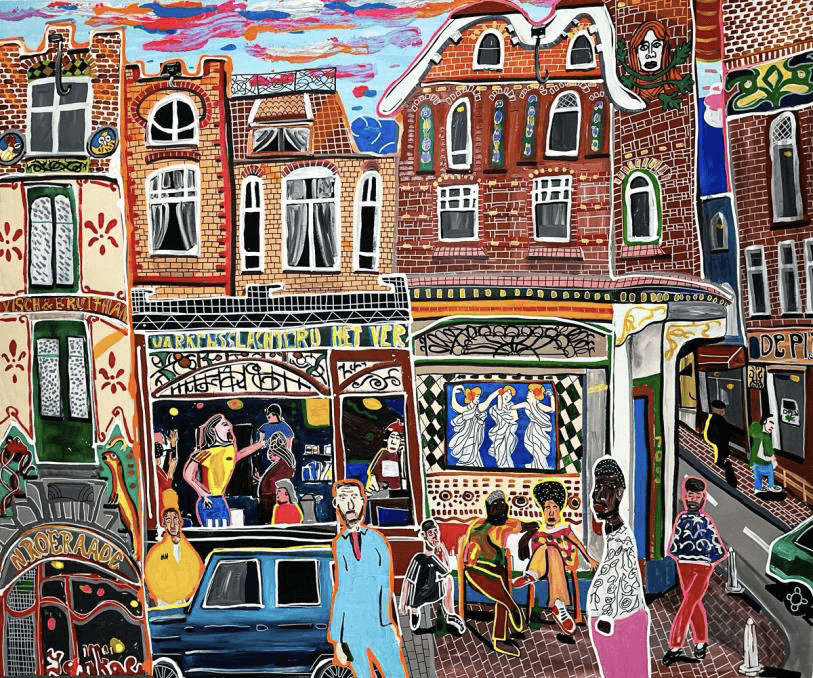
Artwork Amsterdam, Art Noveau | Filipp Jenikae
Artwork Amsterdam, Art Noveau | Filipp Jenikae
There’s a particular kind of intrigue that comes from living in Amsterdam.
It happens in small, mundane moments: waiting in line and hearing a blend of Sranan Tongo, Dutch and Turkish, before you reach the counter. Standing in a shop where the music, the food, and the people don’t quite belong to the same place but somehow still make sense together. Sitting on a tram where conversations overlap, none of them yours, all of them close enough to follow without fully understanding; some of them occupy space in the city only for those few minutes, before disappearing for good. The city doesn’t explain itself, nor does it translate. It places you among difference and lets you decide how far you want to go with it.
It is entirely possible to stay at the surface. To order the food without asking what’s in it, to enjoy the music without knowing where it comes from, to learn how to pronounce a name without asking what it carries. At the same time, you can move through entire neighbourhoods like a visitor who never quite arrives. Proximity, it turns out, is not the same as curiosity, even if it often feels like it should be.
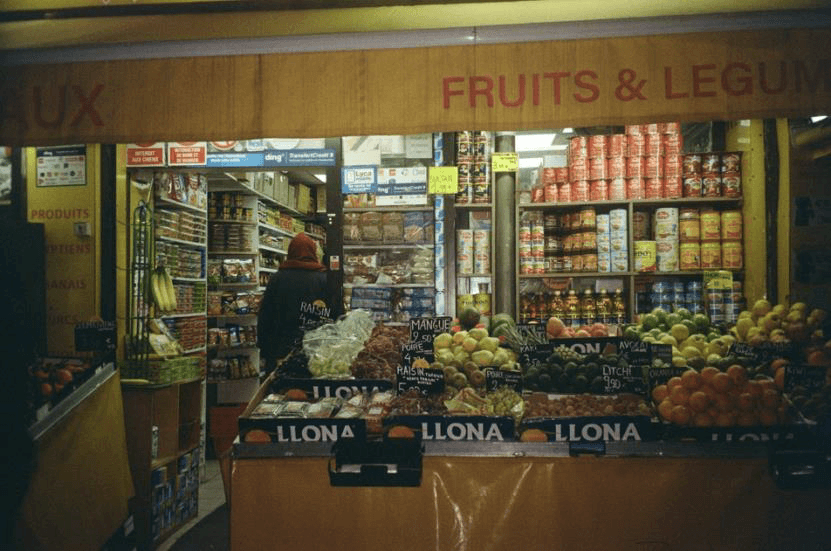
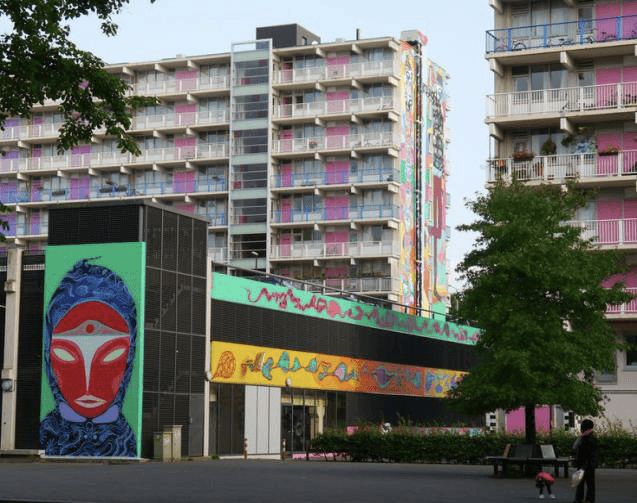
Rimon Guimarães
Cholwe Shilukobo
And yet, there are moments where something shifts, usually quietly. A conversation that lasts longer than expected, a question that opens instead of closes, someone taking the time to explain something slowly, not because you asked perfectly but because you stayed long enough to ask at all. Curiosity, at its simplest, looks like asking, but not all questions do the same kind of work. Some are rudimentary: Where are you from? What do you do? What do you study? Efficient, familiar, and easy to answer. They move the conversation forward without asking much of it.
Others slow things down. They ask for detail, for context, for memory. They do not aim to summarise; they stay with the answer and allow it to unfold.
This matters because most of what we know about each other is partial. A sentence, a detail, a tone we interpret, a silence we try to make sense of. Even in conversation, people remain unfinished, and the rest we quietly construct for ourselves. Saidiya Hartman, in her essay Venus in Two Acts, writes about the limits of what can be known, and the risks of imagining too much in the face of what remains incomplete, where absence invites assumption. While for Hartman this kind of imagining can be productive, here it becomes a way of closing things too quickly. We meet someone once and decide who they are, hear an accent and place it, receive an answer and treat it as complete. Curiosity becomes a shortcut rather than a process— it becomes less about understanding, more about deciding.
But what if curiosity asked for something else?
Not more information, but more restraint. In a city like Amsterdam, that restraint matters. Diversity here is visible, audible, edible; it appears in markets, in tabak shops, in metros, and in the way people move through space. Culture is not something you have to seek out; it is already around you. But being surrounded by difference does not mean engaging with it. It is entirely possible to enjoy a cuisine without being curious about the people who make it, to attend an exhibition without speaking to anyone new, to exist alongside others without ever really meeting them. We see each other often, but we do not always ask. We have learned to live alongside difference without letting it interrupt anything, not our habits, not our assumptions, not ourselves.
So, what does it mean to be curious about each other now; not conceptually, but in practice? It might be smaller than we expect: asking one more question, letting an answer unfold, resisting the urge to turn a person into something quickly understood, wondering whether the jollof you’re eating is Nigeran or Ghanian, or perhaps from somewhere else entirely. Perhaps, it also means allowing people to remain slightly out of reach. Because to be curious about someone is not to fully know them; it is to approach them with the awareness that you won’t, to keep unravelling without expectation of finally getting it. After all, how likely is it that you will ever fully understand not only Amsterdam but, the Netherlands as a whole?
Not more information, but more restraint. In a city like Amsterdam, that restraint matters. Diversity here is visible, audible, edible; it appears in markets, in tabak shops, in metros, and in the way people move through space. Culture is not something you have to seek out; it is already around you. But being surrounded by difference does not mean engaging with it. It is entirely possible to enjoy a cuisine without being curious about the people who make it, to attend an exhibition without speaking to anyone new, to exist alongside others without ever really meeting them. We see each other often, but we do not always ask. We have learned to live alongside difference without letting it interrupt anything, not our habits, not our assumptions, not ourselves.
So, what does it mean to be curious about each other now; not conceptually, but in practice? It might be smaller than we expect: asking one more question, letting an answer unfold, resisting the urge to turn a person into something quickly understood, wondering whether the jollof you’re eating is Nigeran or Ghanian, or perhaps from somewhere else entirely. Perhaps, it also means allowing people to remain slightly out of reach. Because to be curious about someone is not to fully know them; it is to approach them with the awareness that you won’t, to keep unravelling without expectation of finally getting it. After all, how likely is it that you will ever fully understand not only Amsterdam but, the Netherlands as a whole?
If, as we like to say, culture is humanity in motion, then curiosity might be the fuel that keeps it going, that keeps us moving— not as spectators, but as participants in the culture, not as collectors of difference, but as people willing to stay with what we do not immediately understand. So perhaps the question is not whether we are surrounded by difference, because we are, but whether we are still willing to move toward it, toward each other, carefully and intentionally, and what kind of community might emerge if we did.
Zo, faka met jou?
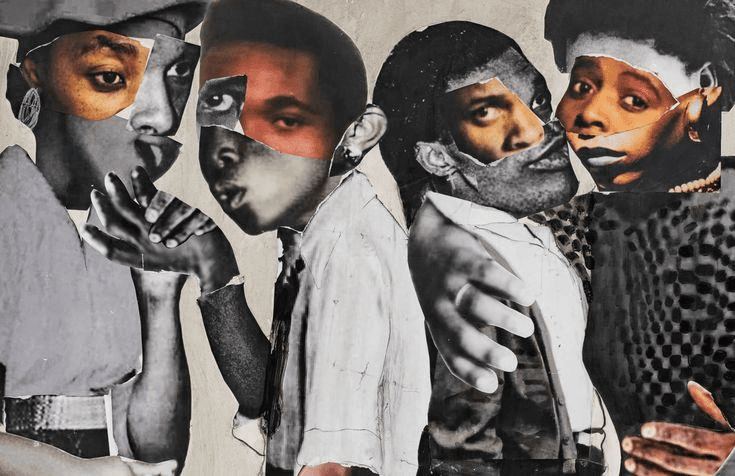
Cholwe Shilukobo
M'gongone | Neo Matlego
M'gongone | Neo Matlego
Rimon Guimarães
If, as we like to say, culture is humanity in motion, then curiosity might be the fuel that keeps it going, that keeps us moving— not as spectators, but as participants in the culture, not as collectors of difference, but as people willing to stay with what we do not immediately understand. So perhaps the question is not whether we are surrounded by difference, because we are, but whether we are still willing to move toward it, toward each other, carefully and intentionally, and what kind of community might emerge if we did.
Zo, faka met jou?
And yet, there are moments where something shifts, usually quietly. A conversation that lasts longer than expected, a question that opens instead of closes, someone taking the time to explain something slowly, not because you asked perfectly but because you stayed long enough to ask at all. Curiosity, at its simplest, looks like asking, but not all questions do the same kind of work. Some are rudimentary: Where are you from? What do you do? What do you study? Efficient, familiar, and easy to answer. They move the conversation forward without asking much of it.
Others slow things down. They ask for detail, for context, for memory. They do not aim to summarise; they stay with the answer and allow it to unfold.
This matters because most of what we know about each other is partial. A sentence, a detail, a tone we interpret, a silence we try to make sense of. Even in conversation, people remain unfinished, and the rest we quietly construct for ourselves. Saidiya Hartman, in her essay Venus in Two Acts, writes about the limits of what can be known, and the risks of imagining too much in the face of what remains incomplete, where absence invites assumption. While for Hartman this kind of imagining can be productive, here it becomes a way of closing things too quickly. We meet someone once and decide who they are, hear an accent and place it, receive an answer and treat it as complete. Curiosity becomes a shortcut rather than a process— it becomes less about understanding, more about deciding.
But what if curiosity asked for something else?
Keep Reading
0%
Keep Reading
0%